



Mitochondria, often called the "powerhouses of the cell", produce about 90% of your body's energy. Their efficiency impacts everything from energy levels to aging and overall health. The good news? Small daily habits can improve mitochondrial function by encouraging the creation of new mitochondria and clearing out damaged ones.
Here are five habits to support mitochondrial health:
- Exercise: Regular activity, especially aerobic, resistance, and HIIT, helps build and improve mitochondria.
- Quality Sleep: Sleep repairs and renews mitochondria, protects against oxidative stress, and supports energy production.
- Stress Management: Relaxation techniques like mindfulness or breathing exercises reduce stress hormones that harm mitochondria.
- Nutrient-Rich Diet: Foods rich in B vitamins, magnesium, CoQ10, and antioxidants fuel and protect mitochondria.
- Intermittent Fasting: Fasting promotes mitochondrial repair and growth while reducing oxidative damage.
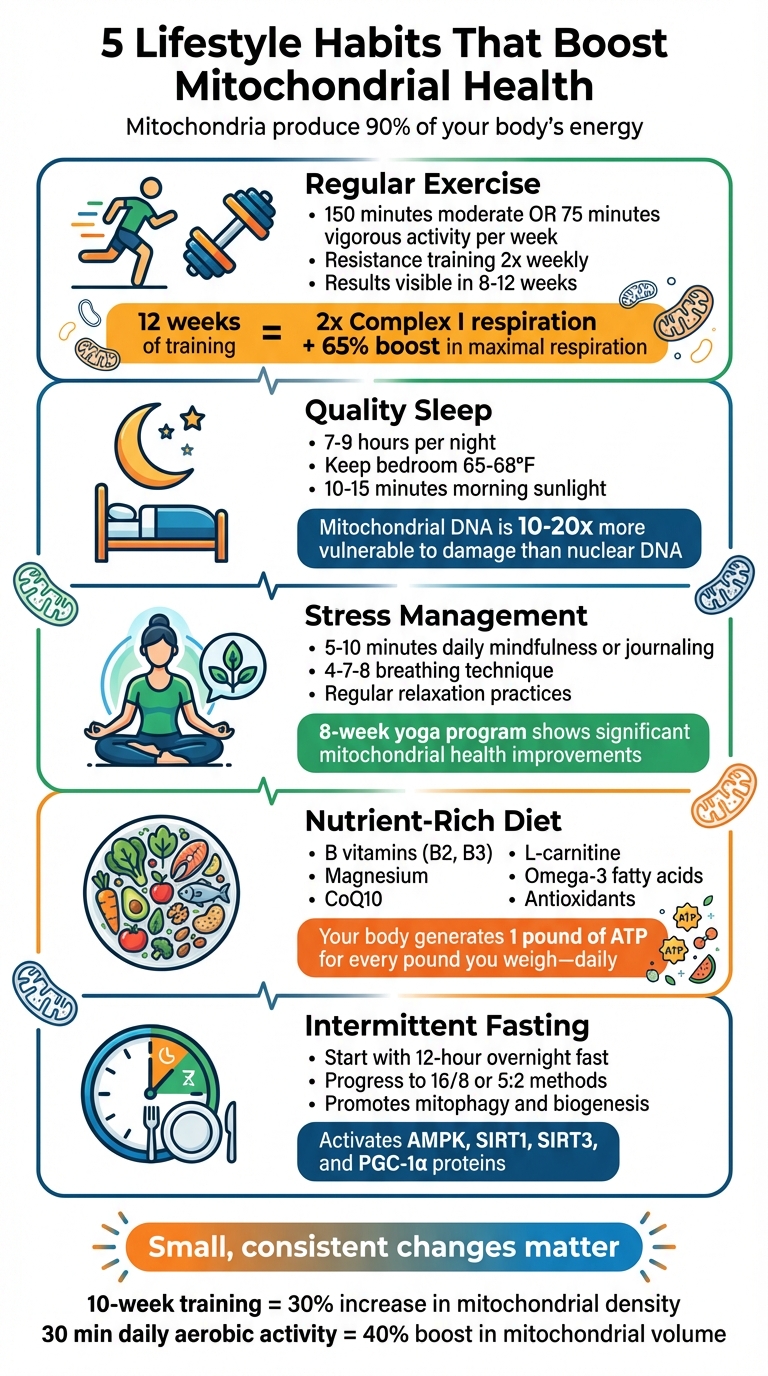
5 Lifestyle Habits That Boost Mitochondrial Health
Top 10 Ways to Boost Mitochondrial Health for All-Day Energy
1. Regular Exercise
Exercise plays a key role in improving mitochondrial function. When you work out, your body triggers cellular signals that encourage mitochondrial biogenesis - essentially the creation of new mitochondria. This process is largely driven by PGC-1α, often referred to as the "master regulator" of mitochondrial production.
Different types of exercise contribute in unique ways:
- Aerobic exercise increases the number of mitochondria.
- Resistance training enhances their efficiency.
- High-Intensity Interval Training (HIIT) quickly stimulates mitochondrial adaptation.
One compelling example comes from a 2015 study at the University of Texas Medical Branch. The research found that 12 weeks of resistance training - three sessions per week at 60–80% of maximum strength - doubled Complex I-supported respiration and boosted maximal uncoupled respiration by 65%.
"Exercise remains the most potent behavioural therapeutic approach for the improvement of mitochondrial health, not only in muscle, but potentially also in other tissues." – The Journal of Physiology
To get the most out of your workouts, mix different types of exercise. Aim for 150 minutes of moderate-intensity aerobic activity or 75 minutes of vigorous activity each week, and include resistance training twice weekly. Keep in mind that consistency is crucial - most meaningful improvements in mitochondrial function take 8 to 12 weeks of regular training. This balanced approach not only supports mitochondrial health but also complements other positive lifestyle habits.
2. Quality Sleep
Quality sleep is a cornerstone of mitochondrial maintenance and renewal, working hand in hand with exercise to keep your body functioning at its best. Sleep is far from just a break for your brain - it's when your mitochondria undergo critical repair and renewal. While you rest, your body clears out damaged mitochondria through a process called mitophagy and produces fresh, healthy ones to replace them. This nightly restoration not only fixes existing damage but also equips your mitochondria to better handle the oxidative stress of daily life.
Protects Mitochondria from Oxidative Stress
Throughout the day, free radicals build up and damage your mitochondria. Sleep is the time when your body deals with these harmful compounds, restoring its antioxidant defenses. Research shows that after 36 hours without sleep, antioxidant levels drop significantly. The silver lining? Just 12 hours of recovery sleep can bring those defenses back to normal.
"Free radicals are produced while you're awake and are eliminated when you sleep. This suggests that a lack of sleep inhibits your body's ability to fight cell stress." – MitoQ
This process is vital because mitochondrial DNA is 10-20 times more vulnerable to damage than nuclear DNA. Without sufficient sleep, your mitochondria become increasingly prone to oxidative stress, which can impair their function over time.
Supports Mitochondrial Biogenesis
Your circadian rhythm, regulated by consistent sleep, plays a key role in mitochondrial production and structure. During deep sleep, your body performs crucial maintenance: removing dysfunctional mitochondria and preparing new ones to take their place. Additionally, mitochondria generate ATP during sleep to fuel your anterior pituitary gland, which releases growth hormones essential for tissue repair and growth.
To promote mitochondrial health through sleep, aim for 7-9 hours per night and stick to a regular sleep schedule. Keep your bedroom cool - around 65-68°F - and ensure it's dark and quiet. Spending 10-15 minutes in morning sunlight can also help synchronize your circadian rhythm, boosting mitochondrial energy regulation throughout the day.
3. Stress Management
Just like exercise and good sleep, managing stress plays a key role in keeping your mitochondria functioning well. Chronic stress can take a toll on mitochondrial health. When you're constantly stressed, your body releases cortisol and other hormones that contribute to Mitochondrial Allostatic Load (MAL). This can lead to structural changes in mitochondria and an overproduction of reactive oxygen species (ROS), which damage their membranes and DNA. Mitochondria are highly sensitive to these stress hormones and respond accordingly.
Protects Mitochondria from Oxidative Stress
Long-term exposure to high cortisol levels disrupts calcium regulation and encourages free radical production, which causes oxidative damage.
"Stress can alter mitochondrial structure and function through stress hormones and other stress signals that are sensed by mitochondria." – Dr. Axe
Incorporating daily relaxation techniques can help regulate ROS levels and boost your body's antioxidant defenses. Spend just 5–10 minutes a day practicing mindfulness or journaling to lower cortisol levels and protect your mitochondria from oxidative stress.
Supports Mitochondrial Biogenesis
Managing stress doesn’t just prevent damage - it also encourages the growth of new mitochondria. A 2021 clinical study demonstrated that participants who followed an 8-week yoga program - featuring 120-minute sessions five times a week with physical postures, breathing exercises, and meditation - showed significant improvements in mitochondrial health and integrity.
"Regular practice of relaxation techniques has been shown to upregulate genes that are linked to healthy mitochondrial function." – Dr. Axe
Even simple breathing exercises can make a big difference. Try the 4-7-8 breathing method: inhale for 4 seconds, hold your breath for 7 seconds, and exhale for 8 seconds. This technique can help shift your body from a state of stress to recovery. By keeping stress under control, you’re helping your mitochondria produce the energy your cells need - after all, mitochondria are responsible for generating about 90% of the ATP that powers cellular functions. Combining stress management with other strategies creates a well-rounded plan for supporting mitochondrial health.
sbb-itb-39f6f92
4. Nutrient-Rich Diet
What you eat plays a direct role in how well your mitochondria perform. These tiny powerhouses are constantly at work; in fact, your body generates about a pound of ATP for every pound you weigh - every single day. Let’s take a closer look at how specific nutrients fuel and protect them.
Boosting Energy Production
Mitochondria rely on key nutrients - like B vitamins (especially B2 and B3), magnesium, L-carnitine, and CoQ10 - to turn food into energy. B vitamins serve as essential cofactors in the ATP production process, while magnesium is critical for activating ATP inside your cells. Without magnesium, ATP can't do its job. Foods like pumpkin seeds, spinach, and almonds are excellent sources of magnesium, while eggs, meat, and nutritional yeast supply plenty of B vitamins.
"Feeding the mitochondria doesn't just mean giving them carbohydrates, fats, and protein. It means supplying the right vitamins, minerals, and micronutrients too." – Daria Mochly-Rosen, Ph.D., Stanford Professor
L-carnitine acts like a transporter, carrying fatty acids into your mitochondria to be used as fuel. You can get L-carnitine from beef, poultry, and dairy products. CoQ10, on the other hand, is critical for the electron transport chain, a key step in ATP production. You’ll find it in organ meats, oily fish, and eggs.
Defending Against Oxidative Stress
Mitochondria are a major source of reactive oxygen species (ROS), making antioxidant protection essential. Omega-3 fatty acids - found in salmon, mackerel, and walnuts - help fortify mitochondrial membranes. Polyphenols from colorful fruits and vegetables, such as berries, grapes, dark chocolate, and pomegranate, strengthen your body’s antioxidant defenses. Meanwhile, sulfur-rich vegetables like broccoli and cabbage support the production of glutathione, often called the "master antioxidant", which protects mitochondria from damage. Cutting back on processed sugars, refined grains, and industrial seed oils can also help by reducing free radical production and preventing glucose metabolism issues.
Encouraging Mitochondrial Growth
Some nutrients go a step further by stimulating the formation of new mitochondria. Compounds like resveratrol, PQQ, alpha-lipoic acid, and polyphenols from cocoa and pomegranate promote mitochondrial biogenesis. By eating a wide variety of colorful vegetables, fatty fish, and healthy fats like olive oil and avocados, you’re giving your body the tools it needs to maintain a strong and efficient mitochondrial network.
5. Intermittent Fasting
Fasting can improve mitochondrial health by activating cellular repair mechanisms.
Supports Mitochondrial Biogenesis
When you fast, your cells experience lower energy availability, which increases NAD⁺ levels. This boost enhances ATP production and activates key proteins like AMPK, SIRT1, SIRT3, and PGC-1α - essential players in mitochondrial biogenesis. This process introduces a mild stress that encourages cells to ramp up mitochondrial production.
"Selectively eliminating dysfunctional mitochondria (mitophagy) and replacing them with new mitochondria (mitochondrial biogenesis) is one of the key mechanisms that help our cells, and in return, we stay biologically younger."
- Sara Adães, Ph.D., Qualia
By promoting the creation of new mitochondria while clearing out damaged ones, fasting supports a rejuvenation process at the cellular level.
Enhances Cellular Quality
Fasting also triggers mitophagy, the process of removing damaged mitochondria. Additionally, it encourages the production of ketones, which serve as a cleaner energy source, generating fewer harmful byproducts compared to glucose metabolism.
If you're new to fasting, start with a straightforward routine like a 12-hour overnight fast - for example, finish dinner by 7 PM and have breakfast at 7 AM. Once you’re comfortable, you can explore more structured methods such as the 16/8 plan or the 5:2 approach. The key is to ease into it, giving your body time to adapt without unnecessary strain.
Conclusion
Mitochondria are the unsung heroes of your body, tirelessly generating about 90% of the energy your cells need to keep you moving, thinking, and thriving. Because they play such a crucial role, taking steps to support these tiny power plants - like exercising, eating nutrient-rich foods, managing stress, getting quality sleep, and even practicing intermittent fasting - can have a profound impact on your overall well-being.
These habits work by activating hormesis, a process where mild stress prompts your cells to adapt and grow stronger. For example, exercise encourages your muscles to produce more efficient mitochondria, while sleep and fasting help clear out old, dysfunctional ones. This teamwork enhances mitochondrial function across your entire body. As Stanford Professor Daria Mochly-Rosen, Ph.D., puts it:
"When mitochondria in your muscles improve, they send little 'treats' - molecules that support your brain, heart, and kidneys. So by exercising, you boost mitochondrial health everywhere".
You don’t need to transform your lifestyle overnight. Small, consistent changes can have a huge impact over time. Research shows that a 10-week endurance training program can increase muscle mitochondrial density by 30%, while just 30 minutes of daily aerobic activity can boost mitochondrial volume in muscle cells by up to 40%. These gradual changes strengthen your cells and build resilience.
The key is consistency. Daily habits like regular exercise, proper nutrition, stress management, and quality sleep work better than sporadic bursts of effort. Pay attention to small shifts - like having more energy in the afternoon, thinking more clearly, or recovering faster after workouts. These subtle signs often reflect improved mitochondrial health long before any test can measure it. When you commit to these practices, your mitochondria will reward you by fueling your body and mind from the inside out.
FAQs
How does intermittent fasting benefit mitochondrial health?
Intermittent fasting helps your mitochondria - your cells' energy factories - by switching your body's energy source from glycogen to fat. This change boosts how efficiently your body uses energy. It also triggers mitochondrial biogenesis, which means your body starts creating new mitochondria, allowing your cells to produce energy more effectively.
Fasting also activates pathways that enhance mitochondrial function and kickstart cellular cleanup processes like autophagy. Together, these mechanisms improve energy production and contribute to healthier cells overall.
What are the best foods to support mitochondrial health and energy levels?
To keep your mitochondria in top shape and maintain steady energy levels, focus on a diet packed with antioxidants, healthy fats, and essential nutrients. Start by loading up on colorful fruits and veggies like berries, spinach, and bell peppers. These are rich in antioxidants, including vitamins C and E, which help shield your mitochondria from oxidative stress.
Incorporate healthy fats into your meals with foods like avocados, nuts, seeds, and fatty fish. These provide essential fatty acids that support mitochondrial function. Don’t forget foods high in Coenzyme Q10 - think organ meats, oily fish, and spinach - as they play a key role in energy production.
Stick to nutrient-dense, minimally processed foods that deliver vital vitamins and minerals like magnesium, B vitamins, and selenium. These nutrients are essential for the enzymes your mitochondria rely on. Combine these eating habits with regular exercise, restful sleep, and stress management to further boost mitochondrial efficiency and overall energy.
How long does it take for lifestyle changes to improve mitochondrial health?
Lifestyle changes can begin to boost mitochondrial health in just a few weeks to a few months. Habits like staying active, getting enough quality sleep, and managing stress effectively support mitochondrial biogenesis - the process where new mitochondria are created - and gradually improve energy production.
Results will differ from person to person, but sticking with these positive changes can lead to better energy levels and a greater sense of vitality. The key is focusing on small, manageable adjustments that are easier to maintain over time for lasting benefits to mitochondrial function.