



Struggling to stay energized all day? Here's a proven, science-backed checklist to keep your energy steady without relying on quick fixes like sugary snacks or caffeine overload. These eight steps focus on simple habits that align with your body’s natural rhythms to help you feel alert and productive.
Key Takeaways:
- Prioritize Sleep: Stick to a consistent schedule, create a restful bedroom environment, and aim for 7+ hours of quality sleep.
- Stay Hydrated: Start your day with water and aim for half your body weight (in ounces) daily.
- Eat a Balanced Breakfast: Combine protein, complex carbs, and fruits/veggies to stabilize blood sugar.
- Move Regularly: Incorporate light activity like walking or stretching to boost energy and focus.
- Get Morning Sunlight: Spend 10–20 minutes outside to sync your internal clock and improve alertness.
- Use Natural Energy Boosters: Consider options like caffeine mints with L-theanine for a smooth lift.
- Take Mindfulness Breaks: Practice deep breathing or gratitude exercises to clear mental fatigue.
- Support Gut Health: Include probiotic foods or supplements to aid digestion and energy production.
Why It Works:
These tips are designed to work with your body, not against it. By focusing on hydration, nutrition, movement, and sleep, you can avoid energy crashes and maintain consistent focus throughout the day. Start small - add one or two steps to your routine this week and build from there.
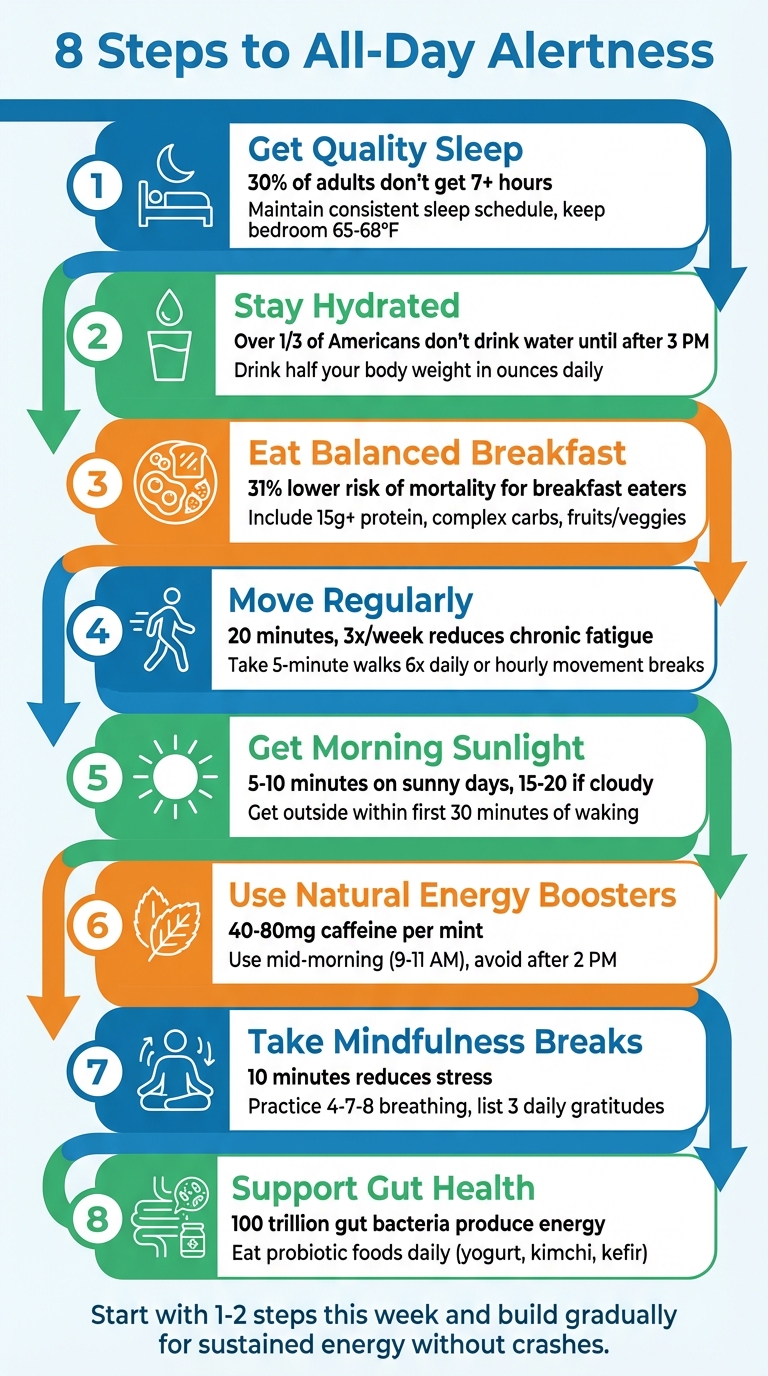
8 Steps to All-Day Energy and Alertness
8 Habits for (Almost) Limitless Energy
Step 1: Get Quality Sleep
Getting enough deep sleep is like recharging your internal batteries - it fuels your cells and supports ATP production, the energy currency of your body. Yet, over 30% of adults don’t get the recommended seven hours of sleep each night. On top of that, about 25% of people say daytime sleepiness affects their ability to focus at work, school, or home.
Skipping out on sleep builds up a "sleep debt", which can mess with your mental and physical performance just as much as staying awake for 24 hours straight. Your brain relies on sleep to declutter, solidify memories, and allow your body to repair tissues and maintain a strong immune system. To make the most of this nightly reset, quality sleep should be your starting point - and a consistent routine can help you get there.
Set a Consistent Sleep Schedule
Your body operates on an internal clock, known as the circadian rhythm, which tells you when to feel awake and when to wind down. Sticking to the same sleep and wake times every day - including weekends - helps keep this rhythm steady. Big changes, like sleeping in on weekends, can disrupt your rhythm and leave you feeling groggy for days.
"We are creatures of habit and finding ways to internalize a routine is the path to success."
- Dr. David Rosen, Sleep Medicine Physician
If you need to adjust your sleep schedule, do it gradually. Shift your wake-up time by 15-minute increments over a few days instead of making a sudden two-hour change.
Create a Restful Environment
The way your bedroom is set up can make or break your sleep. Aim for a cool temperature - around 65°F to 68°F - and block out light with blackout curtains or an eye mask. White noise machines or earplugs can help drown out disruptive sounds.
Don’t overlook your mattress and pillows. If they’re old or uncomfortable, it might be time for an upgrade. Worn-out bedding can interfere with deep, restorative sleep. Also, keep your bedroom reserved for sleep and intimacy only - remove work materials and electronic devices. This helps your brain associate your bed with rest.
Struggling to fall asleep? If you’re still awake after 20 minutes, get out of bed and do a quiet, low-light activity until you feel sleepy again.
Step 2: Stay Hydrated Throughout the Day
Water is the fuel your cells need to keep you going. It plays a vital role in transporting nutrients, circulating blood, regulating your body temperature, and producing ATP - the molecule responsible for delivering energy to your system. When you’re even slightly dehydrated, fatigue often hits first, acting as your body’s warning signal. Let’s break down how staying hydrated boosts your alertness and some practical tips to keep your water intake on track.
Even mild dehydration can make you feel sluggish and reduce mental clarity. Dr. Anthony Komaroff, a Professor of Medicine at Harvard Medical School, puts it plainly:
"Fatigue also is a sign of dehydration"
Here’s a surprising fact: over one-third of working Americans don’t drink any water until after 3:00 p.m. That’s a lot of people running on empty for most of their day.
To figure out how much water you need daily, take your body weight (in pounds) and divide it by two. That number gives you your target water intake in ounces. For example, if you weigh 150 pounds, aim for 75 ounces of water each day. A quick way to check your hydration status is by looking at your urine color - light straw is ideal, while darker shades mean you need more fluids.
Start your day by hydrating right after brushing your teeth to replenish what you’ve lost overnight. Josh York, Founder and CEO of GYMGUYZ, suggests timing your hydration wisely:
"The most important times to hydrate are when you wake up for an energy boost, before bed, and before meals, but sipping throughout the day is helpful as well"
If plain water feels too bland, you can jazz it up with a slice of citrus, cucumber, or a few mint leaves - these add flavor without any added sugar.
Don’t forget that food can also help with hydration. Fruits and veggies like watermelon, cucumbers, strawberries, and celery are packed with water (80–99% to be exact). On the flip side, processed snacks don’t do much to help your hydration. And if you’re a coffee or tea lover, try to balance each caffeinated drink with a glass of water. This is especially important if you consume more than 250–300 mg of caffeine (about two to three 8-ounce cups), as caffeine can act as a diuretic at higher amounts.
Step 3: Eat a Balanced Breakfast
After a night of fasting, your body needs fuel to kickstart the day. Skipping breakfast can leave you running on empty, making it harder to stay energized and focused. A well-rounded breakfast should include three essentials: protein, complex carbohydrates, and fruits or vegetables. This combination helps stabilize blood sugar and keeps those mid-morning sugar cravings at bay.
Research shows that people who eat breakfast have a 31% lower risk of dying from any cause compared to those who skip it. Plus, breakfast eaters who consume more than 25 grams of fiber daily reduce their risk of all-cause mortality by 21%. Dr. David S. Ludwig, a nutrition expert from Harvard-affiliated Children's Hospital Boston, emphasizes:
"Eating breakfast is essential to boost morning energy. Do it right and the benefits can last all day."
Include Protein-Rich Foods
Protein is key to avoiding energy dips and curbing cravings. Erin Rossi, a dietitian at Cleveland Clinic's Bariatric & Metabolic Institute, explains:
"A protein-rich breakfast stabilizes blood sugar and curbs cravings."
Aim for at least 15 grams of protein in your breakfast. Eggs are a top choice, offering high-quality protein and B-vitamins that help convert food into energy. If you prefer dairy, Greek yogurt is a great option as it packs significantly more protein than regular yogurt. Cottage cheese is another standout, with one cup of low-fat cottage cheese delivering 28 grams of protein and 60% of your daily vitamin B12 needs, which are essential for energy production. For plant-based eaters, tofu is a fantastic alternative that provides long-lasting energy.
Pair your protein with whole grains and fresh produce for a balanced start to your day.
Add Whole Grains and Fresh Produce
Complex carbohydrates are your body's go-to source for steady energy. Beth Czerwony, a registered dietitian at Cleveland Clinic, highlights their importance:
"Whole grains provide a gradual, sustained release of energy."
Opt for steel-cut oatmeal, bran flakes, or whole-grain bread instead of refined options like white bread or sugary cereals. When choosing cereals, look for ones with at least 5 grams of fiber and less than 5 grams of sugar per serving. Whole grains digest slowly, ensuring a steady release of glucose into your bloodstream without the spikes and crashes.
Adding fruits or vegetables, such as berries, spinach, or an orange, rounds out your meal. Whole fruits are especially beneficial because their fiber slows sugar absorption, unlike fruit juices, which can cause quick energy highs and lows. If mornings are hectic, prepping options like overnight oats or chia pudding the night before can help you stick to this important meal.
Starting your day with a balanced breakfast lays the groundwork for consistent energy and focus throughout the day.
Step 4: Move Your Body Regularly
You don’t need to hit the gym hard to feel more energized. Even light physical activity can work wonders for your body. It stimulates the production of mitochondria - those tiny power plants inside your cells that convert nutrients into energy (ATP). Movement also boosts your oxygen supply by creating more capillaries to deliver oxygen directly to your cells. Plus, it releases endorphins and small doses of stress hormones that help sharpen your focus.
The secret? Consistency over intensity. Studies show that just 20 minutes of low-to-moderate aerobic exercise, three times a week, can make a noticeable difference for people struggling with chronic fatigue. Dr. Anthony Komaroff, a professor at Harvard Medical School, highlights the cellular benefits:
"It not only helps add muscle mass but also spurs your body to produce more ATP in your cells."
Regular physical activity also improves sleep quality. In fact, exercise is the only proven way to increase deep sleep - the kind that leaves you feeling truly rested and ready to tackle the day. Better sleep leads to more energy, creating a positive cycle that keeps you moving forward. And the best part? These benefits are accessible through simple, everyday movements.
Take Short Walks
Walking is one of the easiest ways to boost your energy and focus. Research shows that taking five-minute walks six times a day can significantly elevate your mood and energy levels. Even a 15-minute walk can clear your mind and improve your sense of well-being.
Beth Czerwony, a registered dietitian at Cleveland Clinic, advises incorporating frequent movement into your day:
"Stand and walk every hour or so can get your blood flowing enough to elevate energy levels."
Make it a habit to stand up and move at least once an hour. Use your breaks for short walks - whether it’s around your office, through your neighborhood, or up and down a few flights of stairs. If you’re tied to your desk, try pacing during phone calls or walking to refill your water bottle. The goal is simple: keep your blood circulating throughout the day.
Try Morning Stretches or Yoga
If walking isn’t an option, stretching can deliver similar benefits. Starting your day with gentle stretches helps counter "atonia", the temporary muscle paralysis that happens during REM sleep. Stretching increases blood flow and brings oxygen to your brain and muscles. You don’t need a full yoga session - even a quick stretch can set the tone for a more energized day.
Gregory Katz, a cardiologist at Nuvance Health, stresses the benefits of morning movement:
"Whether it's yoga, stretching or something a bit more strenuous, anything that gets your blood flowing starts the day off right."
If you can’t leave your workspace, try 30 seconds of high-knees, jumping jacks, or torso twists. Mind-body practices like yoga and tai chi are especially effective for combating stress-related fatigue while giving you a mental boost. By making regular movement part of your routine, you’ll not only feel more energized in the moment but also enjoy better sleep and sustained focus throughout the day.
sbb-itb-39f6f92
Step 5: Get Morning Sunlight
Natural light plays a key role in regulating your body’s internal clock. Your circadian rhythm, the 24-hour cycle that governs sleep and wakefulness, relies on light exposure to stay aligned. Without enough light, your sleep-wake cycle can drift by about 12 minutes each day. That’s why soaking in sunlight first thing in the morning is essential for staying alert and energized throughout the day.
When morning sunlight hits your eyes, it kickstarts a cortisol-awakening response, signaling your brain that it’s time to wake up and focus. Dr. Andrew Huberman, a neuroscientist from Stanford University, emphasizes:
"Getting sunlight within the first 30 minutes of waking can significantly improve both sleep quality and focus, enhancing overall performance throughout the day."
The amount of sunlight you need depends on the weather. On sunny mornings, 5–10 minutes of direct exposure does the trick. If it’s cloudy, aim for 15–20 minutes. On darker days, you may need 30–60 minutes. Keep in mind that being outside is crucial - sunlight filtered through windows or windshields loses key wavelengths that your body depends on to regulate its clock.
Spend Time Outdoors
The easiest way to get your morning light is to step outside within the first hour of waking. This doesn’t have to be complicated - enjoy your coffee, eat breakfast, or take a short stroll while facing the sun. Even a quick 10-minute walk can boost your energy more effectively than a sugary snack. Skip the sunglasses during this time so your eyes can fully absorb the light.
If you’re up before the sun, turn on bright indoor lights to get started, and step outside as soon as daylight breaks. This strategy can help you maintain your rhythm during the darker months. You can also pair your sunlight time with morning tasks like walking the dog, journaling on the porch, or taking work calls outside, making it an easy habit to stick to.
Position Your Workspace Near a Window
If heading outdoors isn’t an option, you can still benefit from natural light by setting up your workspace near a window. Keep your shades open and position your desk to face the incoming light. While this isn’t as effective as outdoor exposure, it still sends daytime cues to your brain, helping you stay focused and energized.
For winter months or areas with limited sunlight, consider using a light therapy lamp with 10,000 lux intensity for 20–30 minutes each morning. These lamps simulate natural sunlight and can help combat the energy dips and mood changes that often come with shorter days. In fact, up to 10% of people in northern regions experience symptoms of Seasonal Affective Disorder (SAD) due to reduced sunlight, making artificial light a practical solution.
Step 6: Use Purelya Nature Energy and Focus Mints

After soaking in some natural sunlight to kickstart your day, it’s time to add an extra spark to your focus with a natural energy boost.
If you’re looking to steer clear of coffee or sugary drinks, Purelya Nature Energy and Focus Mints are a great alternative. Each mint packs natural caffeine (40–80 mg per piece), L-theanine, and Vitamin B12, offering a smooth energy lift without the jitters.
Here’s how it works: caffeine blocks adenosine receptors to reduce fatigue, L-theanine promotes focus by enhancing alpha brain waves, and Vitamin B12 supports energy production. Sandra Hunter, RD, Clinical Nutrition Manager at Northwestern Medicine, explains:
"Black and green tea contain the amino acid L-theanine, which can contribute to feelings of alertness and focus without the jitters sometimes associated with caffeine".
Mid-Morning Energy Boost
To get the most out of these mints, try them mid-morning - between 9:00 a.m. and 11:00 a.m. - when your energy might naturally dip. This timing helps you stay sharp through lunch without overloading on coffee or sugary snacks. Take 1–2 mints for a quick mental lift, but avoid consuming them after 2:00 p.m., as caffeine can linger in your system for up to 7 hours.
Purelya uses patented cold-compression technology for quick absorption. Pairing the mints with water and a high-protein snack can amplify their effects, as even mild dehydration is a common culprit behind fatigue. Notably, 85% of customer reviews praise these mints for delivering clean, steady energy without the crash.
Convenient and Portable
These mints come in a sleek, sliding metal case that’s easy to slip into your bag, desk drawer, or even your car. Whether you’re gearing up for a meeting, a workout, or a study session, they’re a handy on-the-go solution. At just $0.35 per mint, with subscription discounts available, they’re a budget-friendly alternative to daily coffee runs. Plus, healthy adults can safely consume up to 400 mg of caffeine per day, so you can enjoy multiple mints throughout your day without worry.
With their portability and effectiveness, these mints are an effortless way to keep your energy steady as you move through your day.
Step 7: Take Short Mindfulness Breaks
Once you've powered up with natural energy boosters, it's time to give your mind a quick refresh. A short mindfulness break can do wonders - helping to lower stress, sharpen your focus, and keep burnout at bay. Even just a few minutes can make a noticeable difference.
During busy workdays, it's common to fall into shallow breathing patterns, which limit oxygen flow and contribute to fatigue. Spending as little as 10 minutes on focused breathing can ease stress and promote relaxation. Slow, steady breaths activate the parasympathetic nervous system, calming your heart rate and loosening tense muscles.
Deep Breathing Exercises
A simple yet effective breathing technique is the 4-7-8 method. Here's how it works: inhale for 4 seconds, hold your breath for 7 seconds, and then exhale slowly for 8 seconds. This method boosts oxygen flow and improves blood circulation. It’s a great way to clear your mind between tasks and reset your focus.
Another helpful practice is the 5-4-3-2-1 grounding exercise. It’s all about engaging your senses: identify 5 things you see, 4 you can touch, 3 you hear, 2 you smell, and 1 you taste. This quick exercise pulls you into the present moment, making it easier to regain mental clarity.
Once your breathing is steady, you can take things a step further by reflecting on the positive.
Gratitude Reflection
After calming your mind with deep breathing, shifting your focus to gratitude can amplify your sense of clarity and focus. Instead of fixating on what went wrong, pause to appreciate the little things - a kind gesture from a colleague, a great cup of coffee, or simply remembering to grab your keys on the way out. Studies show that acknowledging and writing down positive moments can boost alertness, determination, and overall positivity.
Sheva Assar, Ph.D., a psychologist, highlights the impact of gratitude:
"The more regularly we practice gratitude, the easier it is for our mind to identify and enjoy positive aspects within our lives, which can influence a greater release and experience of serotonin".
One way to build this habit is the three-item rule: every evening, write down three specific things you’re grateful for. This practice doesn’t just improve your mood - it can also enhance your sleep quality and help you start the next day with a proactive mindset. The trick is to focus deeply on each item, truly feeling the gratitude, rather than just listing things mechanically.
Step 8: Support Your Gut Health
Taking care of your gut health plays a big role in maintaining steady energy levels. Your gut is home to around 100 trillion bacteria that break down prebiotic fibers into short-chain fatty acids, which help generate energy. These microbes also interact with your metabolism, immune system, and hormones through the Gut-Brain Axis. When your gut isn’t in good shape, you might notice issues like trouble focusing, difficulty learning, and feeling fatigued. Dr. Will Bulsiewicz, a gastroenterologist, highlights this connection:
"one of the earliest signs of improvement in gut health is an increase in energy"
To give these energy-boosting microbes the support they need, make probiotic-rich foods a regular part of your diet.
Eat Probiotic Foods
Probiotic foods are packed with live microorganisms that help maintain a healthy gut by encouraging good bacteria and keeping harmful ones in check. Some great options include dairy-based probiotics like yogurt (look for ones with L. acidophilus), kefir, and aged cheeses such as cheddar, gouda, or mozzarella. If you prefer non-dairy choices, try kimchi, sauerkraut, miso, tempeh, kombucha, or fermented pickles. Look for labels that say "live and active cultures", and stick to plain varieties to avoid added sugars, which can lead to energy dips.
If you’re using fermented foods like miso or tempeh in cooking, add them toward the end of the process to preserve the live cultures, as too much heat can destroy them. To ease into adding probiotics to your diet, start with one or two new foods each week. Pair them with prebiotic-rich options like bananas, onions, or whole grains to provide fuel for the beneficial bacteria.
Try Purelya Nature Probiotic Chews

For those hectic days when preparing probiotic-rich meals isn’t an option, a supplement can come in handy. Purelya Nature Probiotic Chews are a simple, portable choice. These chews support nutrient absorption and help maintain steady energy levels. You can enjoy them as a mid-morning snack to keep your energy up between meals or make them part of your breakfast routine. The key is consistency - taking them at the same time every day can help keep your body’s rhythms balanced.
Conclusion
Staying energized throughout the day isn’t about quick fixes like sugary snacks or energy drinks that leave you drained soon after. Instead, it’s about weaving healthy habits into your daily routine, as highlighted in our energy checklist. By aligning these eight steps with your body’s natural rhythms, you can avoid disruptions to your internal clock and maintain steady blood sugar levels - giving your brain and muscles the consistent fuel they need.
The key here is consistency. You don’t have to revamp your entire routine all at once. Focus on small, deliberate changes. For example, start by incorporating one or two steps this week, then gradually add more as they become second nature. If you’re adjusting your wake-up time, ease into it by shifting in 15-minute increments each week - this allows your body to adapt without unnecessary strain.
Even simple actions, like a quick five-minute walk or a three-minute meditation, can make a big difference. These micro-activities are easier to stick with compared to long workouts or complex routines, making them ideal for even the busiest schedules.
Think of your daily energy as "energy dollars", a limited resource you must spend wisely. By planning, prioritizing, and pacing your activities using the checklist, you can avoid burning out early in the day. The payoff? Sustained energy, better focus, and the stamina to handle whatever comes your way - all without the dreaded mid-afternoon slump.
FAQs
How can I shift my sleep schedule without feeling tired in the morning?
To adjust your sleep schedule without feeling groggy, it’s best to make small, gradual changes. Start by shifting your bedtime and wake-up time by 15–30 minutes earlier every 2–3 days. This gives your body’s internal clock enough time to adjust naturally. Be consistent with your wake-up time - even on weekends - to keep your circadian rhythm steady.
In the evening, set the stage for better sleep by creating a calming routine. Dim the lights, avoid screens for at least 30 minutes before bed, and try relaxing activities like reading or gentle stretching. In the morning, let natural light greet you within the first hour of waking. Whether it’s a quick walk outside or sitting near a sunny window, this exposure helps reset your internal clock and reduces feelings of grogginess. Keep your bedroom cool - around 65°F - to encourage deeper, more restful sleep.
To support your efforts, avoid caffeine after 2 p.m. and skip heavy meals or vigorous exercise within 2 hours of bedtime. If you need a quick energy boost, a 10-minute nap before 3 p.m. can help without interfering with your nighttime rest. By following these tips, you’ll ease into your new sleep schedule and wake up feeling more refreshed and alert.
What are some easy ways to stay hydrated during a busy day?
Staying hydrated doesn’t have to be a challenge, even when life gets hectic. A simple trick? Keep a reusable water bottle handy - something around 16 fl oz works well - and take a few sips every 15–20 minutes. If you tend to forget, set reminders on your phone or try a hydration-tracking app to keep yourself on track. For those extra sweaty days - whether from a workout or the summer heat - consider a sports drink with electrolytes to help replace what you’ve lost.
If plain water feels a bit boring, jazz it up with a slice of lemon, cucumber, or a handful of berries. These add flavor without piling on sugar. Need hydration-friendly snacks? Grapes, apples, or baby carrots are easy, portable options that can help you stay refreshed.
Another idea is to pair drinking water with your daily routines. For example, have a glass first thing in the morning, before meetings, or after a quick trip to the restroom. Taking small, consistent sips throughout the day can do wonders for your energy, focus, and overall performance.
How can probiotics help boost energy levels?
Probiotics play a big role in boosting energy by keeping your gut microbiome in check. When your gut is healthy, your body can absorb nutrients more effectively, giving you access to key energy sources like glucose and vitamins. Plus, a balanced gut can help minimize low-grade inflammation, a common culprit behind fatigue.
But it doesn’t stop there - your gut and brain are closely connected. Some probiotic strains, often referred to as psychobiotics, can actually produce neurotransmitters like serotonin and GABA. These chemicals help stabilize your mood, sharpen your focus, and clear away mental fog. By supporting both gut health and mental clarity, probiotics offer a natural way to maintain steady energy throughout the day - no need for stimulants.