



ATP, or adenosine triphosphate, is the molecule your body uses to store and release energy. It powers everything from muscle movement to brain activity. Here’s a quick breakdown:
- What It Is: ATP consists of adenine, ribose, and three phosphate groups. Energy is released when the bond between the second and third phosphate groups is broken.
- How It Works: Through hydrolysis, ATP becomes ADP (adenosine diphosphate), releasing about 7.3 kcal/mol of energy.
- Daily Use: Your body recycles ATP constantly - up to 1,500 times per molecule per day, producing around 9 × 10²⁰ ATP molecules every second.
- Energy Systems: The ATP-PC system provides energy for short, intense efforts (like sprints), while other systems take over for longer activities.
- Support: Proper nutrition (magnesium, B vitamins, creatine) and habits like exercise, hydration, and sleep help maintain efficient ATP production.
ATP is the "energy currency" of your cells, ensuring you have the power to function every second of the day.
How ATP Releases Energy: The Hydrolysis Process
The Structure of ATP
ATP, or adenosine triphosphate, is a molecule designed for energy transfer, with a straightforward yet effective structure. It consists of three main components: adenine, a nitrogen-containing base; ribose, a five-carbon sugar that forms the backbone; and a chain of three phosphate groups - known as alpha, beta, and gamma - held together by phosphoanhydride bonds.
What makes these phosphate bonds fascinating is the tension within them. Each phosphate group carries a negative charge, and because like charges repel, these groups naturally push against one another. This repulsion creates instability in the bonds, effectively storing potential energy that can be tapped into quickly. Cells typically maintain ATP levels between 1 to 10 micromolar, ensuring a steady supply is always available for energy demands. This built-in instability makes ATP perfectly suited for rapid energy release.
Hydrolysis: How ATP Breaks Down to Release Energy
The process of hydrolysis uses water to split the bond between the beta and gamma phosphate groups, unleashing ATP's stored energy. When this bond breaks, ATP is transformed into ADP (adenosine diphosphate) and an inorganic phosphate (Pi), releasing a surge of free energy that cells can immediately use.
This energy release is both quick and powerful, driving essential processes like muscle contractions and the Na/K ATPase pump, which is critical for maintaining nerve impulses. To put it into perspective, human cells hydrolyze between 100 to 150 moles of ATP daily to support basic biological functions. What's remarkable is that this system is cyclical - cells can regenerate ATP from ADP through phosphorylation, ensuring a constant flow of energy to keep the body functioning.
ATP hydrolysis mechanism | Energy and enzymes | Biology | Khan Academy

The ATP-PC System: Instant Energy for High-Intensity Movement
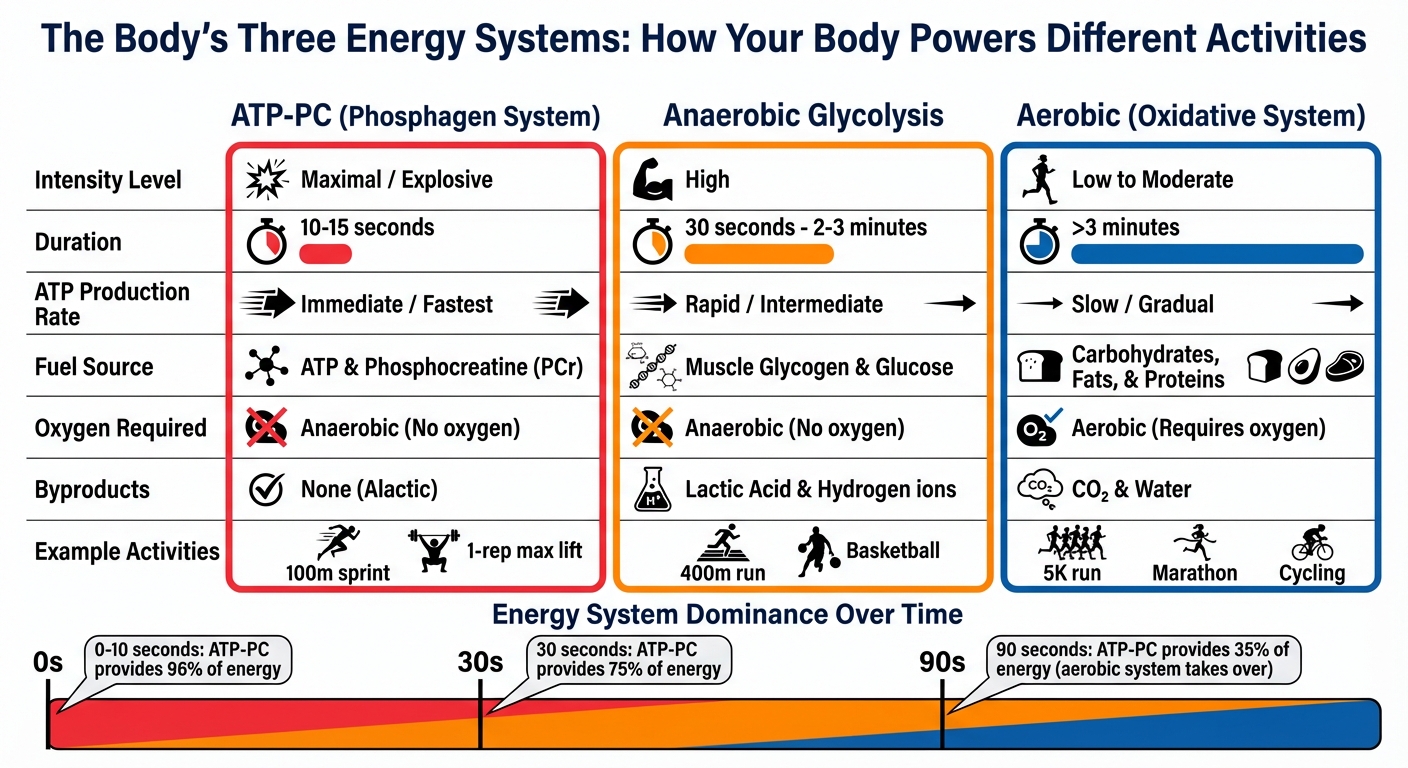
Comparison of Three Energy Systems: ATP-PC, Anaerobic Glycolysis, and Aerobic
What is the ATP-PC System?
The ATP-PC system, also known as the phosphagen system, is the fastest way your body produces energy. It kicks in during short, explosive efforts, like a 100-meter sprint or a one-rep max deadlift. This system relies on two energy sources already stored in your muscles: ATP (adenosine triphosphate) and phosphocreatine (PCr). These provide quick energy without requiring oxygen.
Here’s the breakdown: when ATP is used during intense activity, it loses a phosphate group and becomes ADP (adenosine diphosphate). Phosphocreatine then steps in, donating its phosphate group to ADP through the enzyme creatine kinase. This process rapidly regenerates ATP, allowing your muscles to keep working at maximum intensity. This system is incredibly fast - faster than any other energy pathway. On average, an athlete stores about 285 grams of ATP and enough phosphocreatine to power roughly 10 seconds of all-out effort.
One key feature of the ATP-PC system is that it’s "alactic", meaning it doesn’t produce lactic acid. This is why you don’t feel that burning sensation in your muscles during the first few seconds of activity. However, the downside is that the system depletes quickly because muscles can only store a limited amount of ATP and phosphocreatine. After about 10–15 seconds, your body has to switch to other energy systems to keep going.
"Think of the ATP-PC system as the V8 of your energy systems – it provides you with the most 'power' because it produces ATP more quickly than any other system." - PT Direct
This system plays a vital role in your body’s ability to deliver explosive power when you need it most.
Comparing the Body's Energy Systems
Now that you know how the ATP-PC system delivers energy so quickly, it’s easier to see how it compares to the body’s other energy pathways. Your body relies on three systems to produce energy, and they work together on a continuum. Which system dominates depends on the intensity and duration of the activity. During the first 10 seconds of an all-out effort, the ATP-PC system provides around 96% of the energy. By 30 seconds, that drops to 75%, and by 90 seconds, it’s down to 35%, with the aerobic system taking over.
| Feature | ATP-PC (Phosphagen) | Anaerobic Glycolysis | Aerobic (Oxidative) |
|---|---|---|---|
| Intensity | Maximal / Explosive | High | Low to Moderate |
| Duration | 10–15 seconds | 30 seconds – 2–3 minutes | >3 minutes |
| ATP Production Rate | Immediate / Fastest | Rapid / Intermediate | Slow / Gradual |
| Fuel Source | ATP & PCr | Muscle Glycogen & Glucose | Carbs, Fats, & Proteins |
| Oxygen Required | Anaerobic | Anaerobic | Aerobic |
| Byproducts | None (Alactic) | Lactic Acid & Hydrogen ions | CO₂ & Water |
| Example Activity | 100m Sprint, 1-rep max lift | 400m Run, Basketball | 5K Run, Marathon, Cycling |
This table shows why the ATP-PC system is the go-to for short, high-intensity efforts. To specifically target and train this system, focus on exercises that involve maximum intensity for 10 to 15 seconds - like 50-meter sprints or heavy 1- to 2-rep lifts. Make sure to include long rest periods (a work-to-rest ratio of about 1:10 or 1:12). This rest allows your aerobic system to replenish phosphocreatine stores effectively. For example, after one minute of rest, about 80% of your phosphocreatine stores are restored, and after three minutes, recovery reaches approximately 92%.
sbb-itb-39f6f92
How the Body Regenerates ATP to Maintain Energy Supply
Cellular Processes That Regenerate ATP
Did you know your body stores less than a gram of ATP but recycles an astonishing 99 pounds of it daily to keep everything running smoothly? That’s because ATP, the body’s energy currency, is constantly being regenerated through several processes. These include substrate-level phosphorylation, oxidative phosphorylation in the mitochondria (which can churn out 32 to 38 ATP molecules from just one glucose molecule), and lactic fermentation when oxygen levels drop low.
For example, muscle cells and the brain are energy powerhouses - they cycle through millions of ATP molecules every single second to keep you moving, thinking, and functioning. These efficient recycling systems ensure ATP is always on hand, whether you’re sprinting up a hill or simply recovering after an intense workout. It’s this balance of rapid breakdown and regeneration that fuels both short bursts of energy and sustained activity throughout the day.
How ATP Recovers During Rest
When your body uses up its ATP, it doesn’t take a break - it switches into recovery mode. During rest, the aerobic system kicks in to replenish ATP and phosphocreatine stores while also clearing out metabolic waste. This process ensures your body is ready to go again when needed. Sleep plays a key role in this recovery phase, as it’s when your body focuses on repairing tissues and fully restoring energy reserves for the next day.
"The cell doesn't have to make ATP from scratch every time it needs some energy. Like a rechargeable battery, ATP can also be recharged and reused." - Genetic Science Learning Center
To keep your ATP recovery on point, it’s essential to support your mitochondria - the tiny power plants in your cells. Staying hydrated is crucial, as water is involved in ATP hydrolysis and every step of cellular respiration. On top of that, nutrients like CoQ10, magnesium, and B vitamins play a vital role in helping enzymes and membranes involved in energy production do their job effectively. Taking care of these basics ensures your energy systems are always ready to recharge.
How to Support ATP Production Naturally
Foods and Nutrients That Support ATP Production
Magnesium plays a key role in ATP production. For ATP to be biologically active, it must bind to a magnesium ion. You can boost your magnesium levels by including more leafy greens, nuts, seeds, and whole grains in your diet - all excellent sources of this mineral.
B vitamins are also essential for energy production. For instance, vitamin B3 (niacin) helps generate NAD⁺, which extracts energy from sugars and fats. Similarly, vitamin B2 (riboflavin) is crucial for producing FAD⁺, a coenzyme that transports electrons during ATP synthesis.
Creatine, found in meat and fish, is another important nutrient. It helps quickly convert ADP back into ATP during high-intensity activities. Many people find that a daily dose of 3–5 grams of creatine monohydrate effectively supports muscle energy reserves. Additionally, CoQ10 facilitates electron transfer in mitochondria, while L-carnitine aids in transporting fatty acids into mitochondria for energy production. Foods rich in polyphenols, such as cocoa, pomegranate, grapes, and green vegetables, also support mitochondrial function by providing antioxidant benefits.
Daily Habits for Better Energy Balance
The right nutrients are essential, but your daily habits also play a big role in maintaining an efficient energy system. Regular exercise, for example, increases ADP and AMP levels, which activate enzymes that speed up ATP production. Whether you prefer endurance workouts, resistance training, or high-intensity intervals, consistent physical activity improves oxygen delivery to muscles and supports mitochondrial health. Even passive heat exposure, like using a sauna or trying cold plunges, can enhance mitochondrial capacity. Together, these habits not only boost overall health but also improve your cells' ability to regenerate ATP.
Sleep is another critical factor. Aim for 7–9 hours of quality rest each night to allow your body to repair tissues and restore hormones that regulate energy production. Managing stress is equally important. Chronic stress can increase glucose demand and negatively impact mitochondrial function. Practices like deep breathing, meditation, or yoga can lower cortisol levels, protecting the brain's energy supply - it uses about 25% of the body's total ATP. These stress-management techniques help keep your energy systems running smoothly.
How Purelya Nature Can Help

Alongside proper nutrition and lifestyle changes, supplements can provide an extra boost for ATP production. Purelya Nature offers high-quality formulas designed to deliver essential nutrients like magnesium, B vitamins, and CoQ10 in forms that are easy for your body to absorb. These formulations work together to enhance oxygen transport, protect cellular membranes, and reduce oxidative stress in mitochondria. By supporting your body's natural energy production processes, Purelya Nature helps you feel more energized, focused, and resilient throughout the day. It's an investment in better energy and well-being - naturally.
Conclusion: Using ATP Knowledge for Better Daily Energy
Understanding ATP sheds light on how your body generates and uses energy. This constant cycle fuels everything from muscle movement to brain activity - fun fact: your brain alone uses about 25% of your total ATP supply. Knowing this can help you make smarter choices to maintain steady energy levels throughout the day.
ATP production is a team effort. Aerobic processes are much more efficient than anaerobic ones when it comes to sustaining energy. Plus, magnesium plays a key role in activating ATP. Without enough of this mineral, ATP can't bind or release energy effectively. That’s why maintaining cardiovascular health and getting the right nutrients is so important for keeping your energy systems running smoothly.
Everyday habits can have a big impact on your energy levels. Eating magnesium-rich foods, staying physically active to improve oxygen flow, getting 7 to 9 hours of sleep, and managing stress all support ATP regeneration. These simple lifestyle choices work with your body’s natural processes to help you stay energized, even during hectic days.
For an extra boost, combining these habits with targeted supplements can make a difference. Purelya Nature supplements, for instance, offer magnesium, B vitamins, and CoQ10 in forms your body can easily absorb. When paired with a healthy lifestyle, these nutrients help optimize ATP production, leading to sharper focus, better physical performance, and greater resilience overall.
FAQs
How does ATP release energy to power cellular activities?
ATP generates energy through a process known as hydrolysis, where one of its high-energy phosphate bonds is broken. This reaction results in the formation of ADP (adenosine diphosphate), an inorganic phosphate, and a release of energy that cells can immediately use to carry out essential tasks.
This energy drives critical processes such as muscle contractions, transporting molecules across cell membranes, and building complex compounds. Acting as the body's main energy currency, ATP ensures energy is delivered quickly and efficiently whenever required.
How does the ATP-PC system fuel high-intensity exercise?
The ATP-PC system is the quickest way your body generates energy for short, high-intensity activities like sprinting or heavy lifting. It relies on breaking down creatine phosphate stored in your muscles to rapidly restore ATP (adenosine triphosphate), which is the main energy source your cells use.
This system shines during bursts of maximum effort that last up to 10 seconds, giving your muscles the fuel they need when the demand is highest. Once that burst is over, your body needs rest to rebuild creatine phosphate levels, preparing you for the next round of performance.
What are some natural ways to boost ATP production in the body?
To give your body's ATP production a natural boost, start with a well-rounded diet packed with key nutrients like B vitamins, magnesium, and antioxidants - these are essential for keeping your mitochondria working effectively. Adding regular aerobic exercise to your routine can also help, as it improves how efficiently your mitochondria produce energy.
On top of that, make sure you're getting enough quality sleep and managing stress levels. Both are essential for maintaining healthy cellular energy processes. By focusing on these habits, you’re not just supporting ATP production - you’re also fueling your overall energy and vitality.