



Natural pre-workout energy sources provide steady, lasting fuel without the crashes or jitters linked to synthetic supplements. They're packed with nutrients, easy to digest, and support sustained performance. Here's what you need to know:
- Carbs: Quick energy from fruits or oats fuels your workout.
- Electrolytes: Bananas and coconut water prevent cramps and maintain hydration.
- Caffeine: Found in coffee or matcha, it boosts focus and endurance.
- Nitrates: Beet juice improves blood flow and oxygen delivery to muscles.
Timing matters: Eat simple carbs 30–60 minutes before exercise or complex carbs 2–3 hours prior. Stay hydrated, and choose natural drinks like coconut water or beet juice for added benefits.
Experiment with these options to find what works best for your routine. Fuel smart, perform better.
5 Energy Boosting Pre-Workout Foods | Bodybuilding.com
Key Nutrients for Pre-Workout Energy
Fueling your body with the right nutrients before a workout can make a big difference in your performance. Knowing what to eat and when ensures you have the energy to power through even the toughest sessions. Here’s a breakdown of the key nutrients that help you maximize your workout.
Carbohydrates for Quick Energy
Carbohydrates are your body’s go-to energy source during exercise. They break down into glucose, which provides immediate energy, while excess glucose is stored as glycogen in your muscles and liver for later use. These glycogen reserves become especially critical during moderate- to high-intensity workouts.
The type of carbs you choose depends on how soon you’re exercising. Simple carbs, like fruit or honey, digest quickly and are perfect if you’re eating 30 to 60 minutes before a workout. On the other hand, complex carbs, such as oatmeal or brown rice, release energy more steadily, making them a better option 2 to 3 hours before exercise. If your workout lasts over an hour, glycogen stores can deplete, so consuming 30 to 90 grams of carbs per hour during extended sessions can help maintain your energy levels. Dietitian Nora Minno, R.D., emphasizes:
Glucose is the preferred source of fuel for your brain and body.
Potassium and Electrolytes
Electrolytes - like sodium, potassium, and magnesium - are essential for keeping your body’s fluid balance in check and supporting muscle and nerve function. Potassium, in particular, helps prevent muscle cramps and supports proper muscle control, but it’s lost through sweat during intense activities. Replenishing potassium can be key to avoiding cramps and fatigue.
During high-intensity workouts, you can lose 1–3 liters of sweat per hour, which depletes these vital electrolytes. To stay balanced, try natural sources like bananas, coconut water, or even adding a pinch of Himalayan pink salt to your water. These options help replenish electrolytes without the artificial ingredients often found in sugary sports drinks.
Caffeine and Nitrates
Caffeine, found naturally in coffee or matcha, stimulates the central nervous system, improving focus, alertness, and energy. It also promotes the release of fatty acids, which your body can use as fuel. A dose of 90 to 180 milligrams - about one to two cups of black coffee - has been shown to enhance performance. As sports dietitian Kelli Santiago explains:
Caffeine is the most widely studied pre-workout ingredient and a proven enhancer of athletic performance, alertness and concentration.
Nitrates, found in foods like beetroot, spinach, and arugula, convert to nitric oxide in your body. This process dilates blood vessels, improving blood flow and delivering more oxygen to your muscles. The result? Better endurance and reduced fatigue during high-intensity workouts. To get the most out of nitrates, drink 3–6 oz of beet juice or mix 1 teaspoon of beet powder into your drink about 60–90 minutes before exercising. If you’re using matcha or green tea for caffeine, the added L-theanine helps smooth out energy levels and reduces the jittery feeling. Natural pre-workout options typically kick in within 30 minutes and last for around 2.5 hours.
These nutrients are the building blocks of a solid pre-workout routine, helping you choose foods and drinks that fuel your body effectively.
Best Natural Foods for Pre-Workout Fuel
When it comes to pre-workout snacks, choosing nutrient-dense whole foods can make a big difference in your energy levels and performance. The key is to pick foods that provide a balanced mix of carbohydrates, natural sugars, and essential nutrients to fuel your body. Here are three standout options that deliver natural, effective energy.
Bananas: Quick Energy and Potassium
Bananas are a go-to pre-workout snack for a reason. A medium banana (about 4 oz) packs 27 grams of carbohydrates, including glucose, fructose, and sucrose. These natural sugars are quickly digested, making bananas an excellent source of immediate energy. Plus, they’re loaded with potassium and magnesium, two electrolytes that help your muscles contract efficiently and reduce the risk of cramping.
Sports dietitian Nick Lemke, RD, sums it up perfectly:
Bananas are an ideal pre-packaged, quick energy pre-workout food... They're light, easy to digest, and packed with fast-acting carbs.
When to eat them: For best results, enjoy a banana 5–60 minutes before your workout. Their easy digestibility makes them a great choice even right before high-intensity activities.
Dates: Sustained Energy and Natural Sugars
Dates are small but mighty when it comes to energy. Just two pitted Medjool dates (about 1.7 oz) provide 36 grams of carbohydrates, nearly all from natural sugars. Each date contains about 18 grams of sugar, offering a concentrated energy boost that’s perfect for fueling your workout.
In addition to carbs, dates contain bioactive compounds that may help combat oxidative stress and inflammation caused by exercise. They’re so effective that they can rival commercial energy gels for endurance sports like running or cycling. To maximize their benefits, eat dates 30–60 minutes before your workout or during extended sessions to replenish glycogen stores. However, due to their fiber content, they’re better suited for moderate activities - stick to simpler options like bananas for intense cardio within 30 minutes.
Oats: Slow-Releasing Carbs
Oats are a fantastic choice for sustained energy. As a complex carbohydrate, they release glucose gradually, providing a steady stream of fuel for longer workouts without the energy spikes and crashes associated with simple sugars. A serving of instant oatmeal contains around 150 calories and is rich in thiamin (vitamin B1), which helps convert food into energy during exercise.
Because of their high fiber content, oats take longer to digest. For optimal results, eat oatmeal 1–3 hours before your workout to give your body enough time to process it. This makes oats a perfect breakfast option for morning workouts. However, avoid eating them too close to high-intensity sessions, as the fiber could lead to bloating or discomfort.
sbb-itb-39f6f92
Natural Drinks for Pre-Workout Energy
Natural drinks can give you a quick hydration boost while targeting specific workout needs. Whether you're aiming to improve endurance, sharpen focus, or stay hydrated, there's a drink tailored to your goals.
Beet Juice for Performance
Beet juice is a favorite for boosting stamina and endurance. It’s rich in nitrates, which your body converts into nitric oxide. This compound helps widen blood vessels, improving oxygen delivery to muscles and making oxygen usage more efficient during intense exercise.
For the best results, drink beet juice about 60 to 90 minutes before your workout. This timing allows your body to fully convert the nitrates into nitric oxide. If you’re looking to save money and enjoy the best flavor, fresh beets are typically in season from June to October. Keep consumption moderate, sticking to 1–3 servings per week.
Coffee and Matcha for Clean Caffeine
Both coffee and matcha provide natural sources of caffeine, which can enhance alertness and reduce the feeling of effort during exercise. A cup of coffee contains around 95 mg of caffeine, while matcha offers a milder dose paired with L-theanine. This amino acid helps maintain steady energy without the jitters that can come with coffee.
The effects differ slightly. Coffee delivers a quick adrenaline boost, making it ideal for high-intensity workouts. Matcha, with its "calm alertness", provides a more sustained focus thanks to the moderating effects of L-theanine. If coffee tends to upset your stomach, consider cold brew, which is less acidic and gentler.
To maximize the benefits, drink coffee or matcha about 30–60 minutes before exercising. Since caffeine peaks around 45–60 minutes after consumption, this timing ensures you're ready to go. To avoid interfering with sleep, skip caffeine at least 4–6 hours before bedtime.
Coconut Water for Hydration
Proper hydration is essential, and coconut water is a natural way to replenish electrolytes. It’s packed with potassium and magnesium, two minerals that support muscle function and help prevent cramps. While plain water works for basic hydration, coconut water adds a touch of natural sugar for quick energy during intense workouts.
Start sipping coconut water about 4 hours before your workout to ensure you're well-hydrated. A simple way to check your hydration status is by observing your urine color - dark urine means you need more fluids, while lighter urine indicates you’re in good shape. For an added mineral boost during sweaty sessions, try mixing in a pinch of Himalayan pink salt to replace electrolytes lost through sweat.
DIY Pre-Workout Recipes and Timing
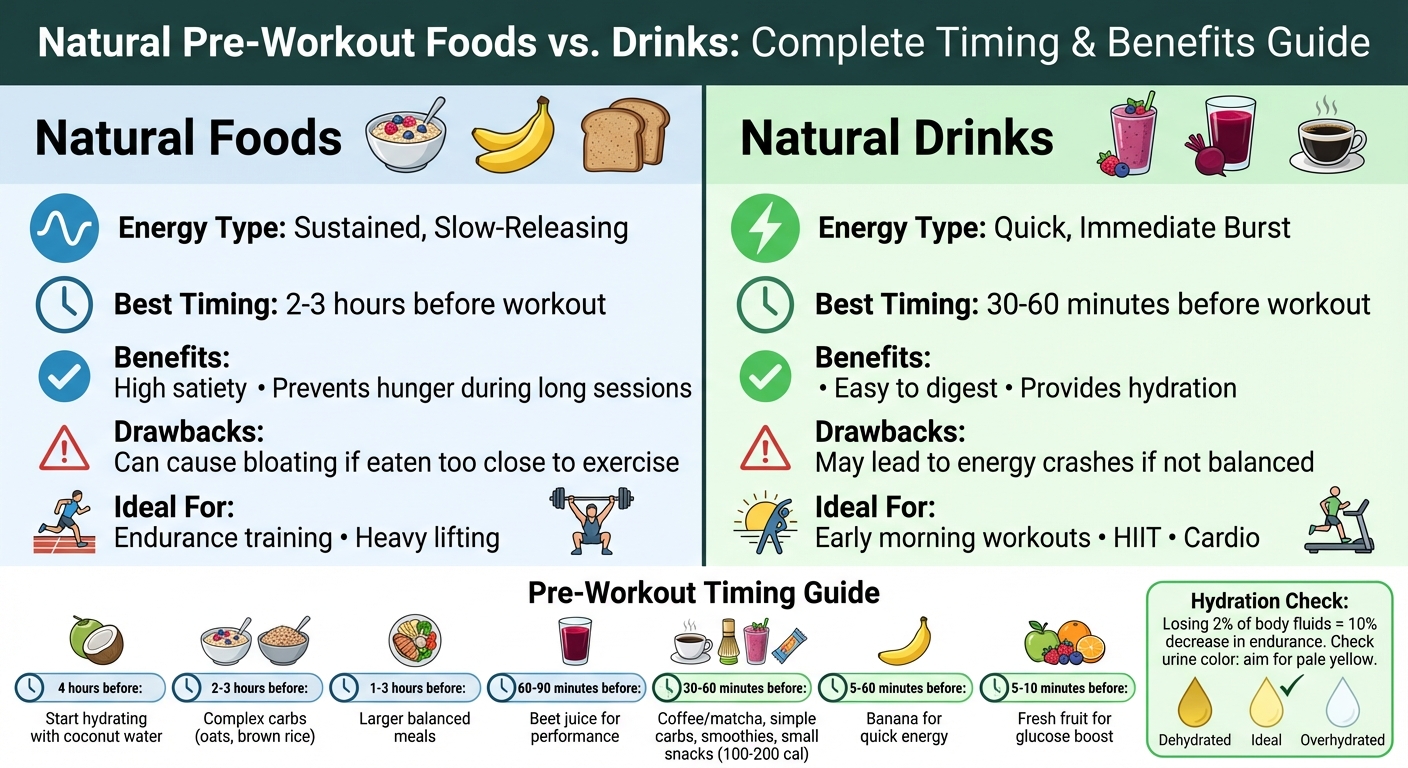
Natural Pre-Workout Foods vs Drinks: Timing and Benefits Guide
Simple Recipes for Natural Energy
Looking for a quick energy boost before hitting the gym? Here are a few easy-to-make options:
- Pre-workout smoothie: Blend 4 oz of berries, ½ banana, ¼ cup Greek yogurt, ⅓ cup almond milk, ⅓ cup orange juice, 1 tablespoon beet powder, and 1 tablespoon MCT oil until smooth.
- Performance drink: Mix 1 cup beet juice with ½ cup water, 1 teaspoon maca powder, a pinch of Himalayan salt, 1 teaspoon green tea powder, and a squeeze of lemon.
- Energy balls: Combine nut butter, dried dates or raisins, honey, and oats. Roll into bite-sized balls and refrigerate for a convenient grab-and-go snack.
- Peanut butter toast: Spread 2 tablespoons of peanut butter and 1 tablespoon of natural fruit jelly on whole-grain toast for a balanced mix of protein and quick sugars.
These recipes are packed with nutrients to fuel your workout, but timing them right is just as important.
When to Eat Before Your Workout
What you eat matters, but when you eat can make or break your workout. Here’s a quick guide:
- Small snacks or drinks (100–200 calories): Best consumed 30–60 minutes before exercise. This gives your body enough time to process the food without feeling weighed down.
- Larger, balanced meals: If your meal includes complex carbs, protein, and healthy fats, aim to eat 1–3 hours before working out. This ensures proper digestion and a steady energy supply.
- Short on time? A piece of fresh fruit 5–10 minutes before exercise can provide a quick glucose boost.
It’s also wise to steer clear of high-fiber foods (like beans and broccoli) and high-fat options (like fried foods) right before training. These can slow digestion and cause bloating, which is the last thing you want during a workout.
Comparison Table: Natural Foods vs. Drinks
Here’s a quick breakdown of how natural foods and drinks stack up for pre-workout energy:
| Feature | Natural Foods (Oats, Toast) | Natural Drinks (Beet Juice, Smoothies) |
|---|---|---|
| Energy Type | Sustained, slow-releasing | Quick, immediate burst |
| Best Timing | 2–3 hours before workout | 30–60 minutes before workout |
| Benefits | High satiety; prevents hunger during long sessions | Easy to digest; provides hydration |
| Drawbacks | Can cause bloating if eaten too close to exercise | May lead to energy crashes if not balanced |
| Ideal For | Endurance training, heavy lifting | Early morning workouts, HIIT, cardio |
Whether you prefer a hearty snack or a quick drink, matching your choice to your workout style and timing can help you perform at your best.
Conclusion
Fueling your workout naturally can be both straightforward and effective. At its heart, it’s about understanding that carbohydrates are your body’s quickest and most efficient energy source, and timing your intake properly makes all the difference.
Natural pre-workout foods align with your body’s needs, offering sustained energy without the dreaded crash. As Nancy Clark, R.D., wisely says:
When you put food in your body, it just goes better.
To find what works best for you, try different natural pre-workout combinations and pay attention to how timing and specific foods impact your performance. Keeping a simple journal - what you ate, when you ate it, and how you felt during your workout - can reveal your personal go-to energy sources.
Don’t overlook hydration - it’s just as important as food. Losing even 2% of your body’s fluids can cut your endurance by up to 10%. A quick check of your urine color before training can help; aim for a light, pale yellow rather than dark and concentrated.
FAQs
What are the best natural ways to boost energy before a workout?
The best way to fuel your body before a workout is by choosing nutrient-packed foods and drinks that give you steady energy. Fruits like bananas or apples are excellent for a quick dose of natural sugars, while nuts and seeds provide healthy fats and protein to keep you going longer. If you're looking for slow-burning energy, whole grains like oatmeal or whole-grain toast are solid options.
When it comes to drinks, coffee or green tea can give you a natural caffeine kick, helping with focus and endurance. Not a fan of caffeine? Coconut water is a great alternative, offering hydration and electrolytes. These simple, natural options can fuel your workout without relying on processed or artificial products.
When should I eat before a workout to get the best results?
For optimal workout performance, try to have a balanced meal containing carbohydrates and protein about 1 to 3 hours before you exercise. This timing allows your body to digest the food and convert it into energy, helping you perform more effectively.
If you're pressed for time, a quick snack like a banana or a handful of crackers 5 to 10 minutes before your workout can give you a fast energy boost. Stick to light, easy-to-digest options to avoid any discomfort and stay energized throughout your session.
Why are nitrates beneficial for pre-workout, and how do they support exercise performance?
Nitrates are a great addition to your pre-workout routine because they help increase nitric oxide production in the body. This process improves blood flow, boosts muscle efficiency, and supports overall exercise performance. The result? Workouts that feel less exhausting and a noticeable boost in endurance - especially during those long or high-intensity sessions.
Here’s how they work: nitrates reduce the oxygen demands of your muscles while enhancing blood circulation. This one-two punch allows your body to perform at a higher level, making nitrates a natural and effective way to elevate your fitness game.