



Polyphenols are plant-based compounds found in foods like fruits, vegetables, tea, coffee, cocoa, and wine. They play a key role in protecting brain health by reducing oxidative stress, lowering inflammation, and supporting neuron growth. Studies show diets rich in polyphenols can lower dementia risk by up to 50%. Foods like blueberries, dark chocolate, green tea, and turmeric are excellent sources. Adding these to your daily meals can help maintain memory, focus, and overall cognitive function.
Key Insights:
- Polyphenols combat oxidative stress and inflammation in the brain.
- They boost brain-derived neurotrophic factor (BDNF), aiding neuron growth and connectivity.
- Resveratrol (grapes/wine), curcumin (turmeric), and cocoa flavanols are standout nutrients.
- Daily polyphenol target: ~650 mg from food or supplements.
Quick Tip: Start your day with coffee and blueberries, enjoy dark chocolate as a snack, and add turmeric to your meals for an easy brain-health boost.
How Polyphenols Protect the Brain
Reducing Oxidative Stress and Neuroinflammation
Even though your brain is relatively small, it uses about 20% of your body’s oxygen, which makes it especially prone to oxidative damage. Polyphenols play a key role here by neutralizing harmful reactive oxygen (ROS) and nitrogen (RNS) species, shielding critical neuronal components like lipids, proteins, and DNA.
But their work doesn’t stop there. Polyphenols also boost your body’s own antioxidant defenses. They activate the Nrf2/ARE signaling pathway, which increases the production of natural antioxidant enzymes such as superoxide dismutase (SOD), glutathione peroxidase (GPx), and catalase. This creates a protective effect that lasts well beyond the time polyphenols remain in your system.
On top of their antioxidant abilities, polyphenols reduce inflammation in the brain. They suppress Nuclear Factor-kappa B (NF-κB), which is responsible for turning on pro-inflammatory genes. They also calm overactive microglia - your brain’s immune cells - shifting them from a harmful inflammatory state to a protective one. Additionally, enzymes like COX-2 and iNOS, which produce inflammation-driving compounds, are inhibited by polyphenols.
"Polyphenols, by simultaneously alleviating oxidative stress and inflammasome-mediated inflammation, may fill a unique niche for treatment of presymptomatic neurodegenerative disorders that targeted pharmacological therapies are not designed to provide." - Francis Herman, Department of Neurology, Mount Sinai School of Medicine
These combined antioxidant and anti-inflammatory actions create an environment where neurons can thrive and connect more effectively.
Improving Synaptic Plasticity and Neurogenesis
Polyphenols don’t just protect neurons - they help them grow and connect. By activating the ERK/CREB pathway, polyphenols increase the production of BDNF (brain-derived neurotrophic factor), a protein crucial for neuron survival, growth, and the formation of synapses. BDNF is so vital that its absence can weaken memory and disrupt long-term potentiation, a key process for learning.
These compounds are particularly beneficial for the dentate gyrus in the hippocampus, a region highly sensitive to aging. Polyphenols encourage the growth of precursor cells that develop into new neurons. For example, animal studies have shown that adding blueberries to the diet improved spatial memory in just three weeks - a period equivalent to roughly three years in humans.
Polyphenols also enhance blood flow to the brain, ensuring a steady supply of oxygen and nutrients needed for neuron growth. They increase the density of dendritic spines - tiny structures essential for forming synapses - and improve overall connectivity between neurons, which is critical for memory and learning.
These benefits aren’t limited to specific brain regions; they contribute to overall brain health and functionality.
Supporting the Gut-Brain Axis and Blood-Brain Barrier
Your gut and brain are more connected than you might think, and polyphenols play a key role in maintaining this relationship. Acting as prebiotics, polyphenols help shape a healthy gut microbiome. They encourage the growth of beneficial bacteria like Bifidobacterium and Lactobacillus, which produce neurotransmitters such as GABA and serotonin. These neurotransmitters influence brain activity, particularly in the hippocampus, and may even reduce amyloid-beta buildup.
Polyphenols also strengthen the intestinal barrier, preventing "leaky gut", a condition where harmful bacterial products like lipopolysaccharides (LPS) enter the bloodstream and spark systemic inflammation that can reach the brain. Studies have shown that improving gut health can positively impact cognitive function, as reflected in better MMSE scores in individuals with mild cognitive impairment.
The blood-brain barrier (BBB), which acts as a protective filter for your brain, also benefits from polyphenols. These compounds protect the BBB from oxidative stress and inflammation. Certain polyphenols, such as epigallocatechin (EGCG), daidzein, genistein, and nobiletin, can even cross the BBB, allowing them to directly safeguard the brain. Others, like resveratrol, improve blood flow and nutrient delivery to the brain, ensuring the BBB remains functional and robust.
Eat These 6 Polyphenol Foods To Improve Your Brain Health
Best Polyphenol-Rich Foods for Brain Health
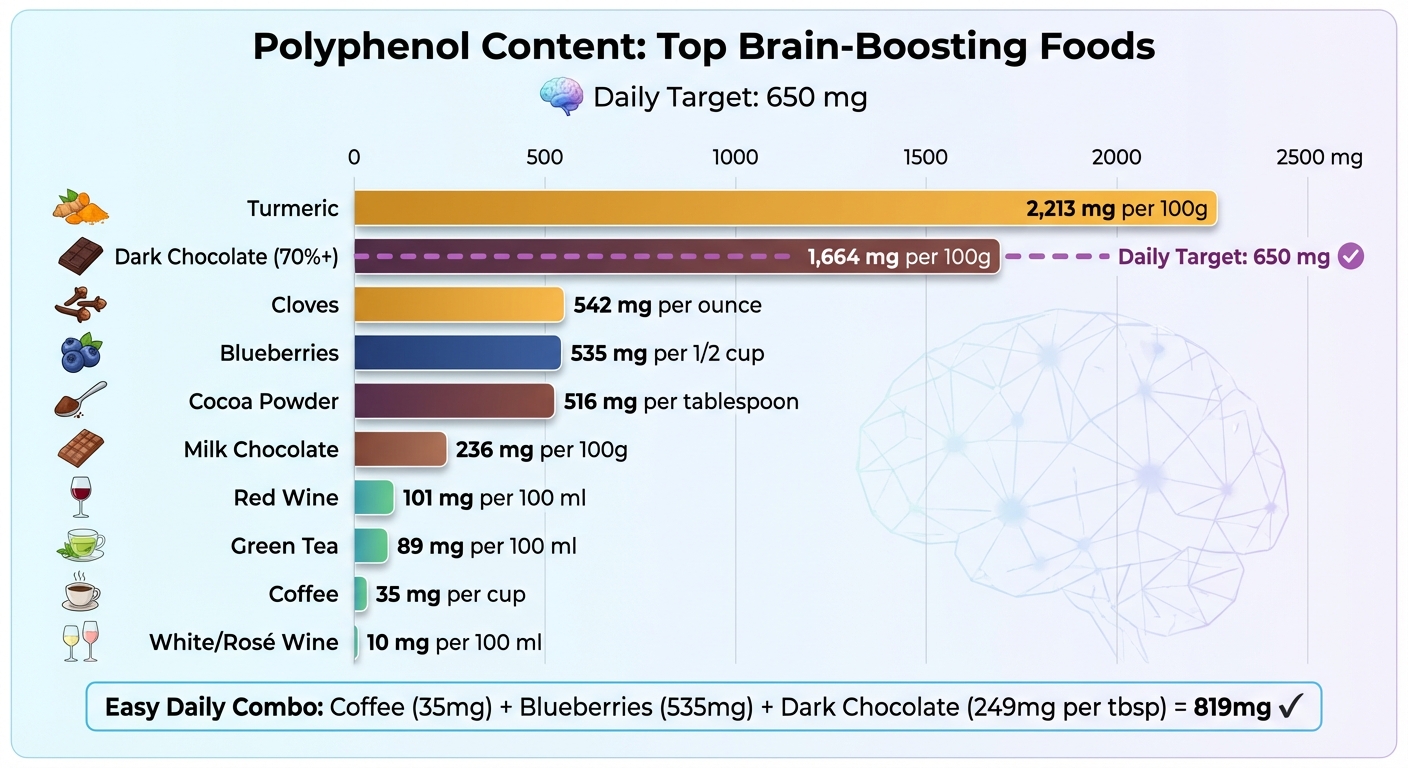
Top Polyphenol-Rich Foods for Brain Health: Content Comparison
Polyphenols are a game-changer when it comes to supporting brain health. These natural compounds offer neuroprotective benefits, and the best part? Many polyphenol-rich foods are already staples in most diets, making it easy to incorporate them into your routine. Let’s dive into some of the top options.
Resveratrol from Grapes and Red Wine
Resveratrol, a compound found in grape skins, plays a key role in improving blood flow to the brain and maintaining memory and executive function, especially in older adults. Red wine is a well-known source, boasting 101 mg of polyphenols per 100 ml, far outpacing white or rosé wines, which contain only about 10 mg per 100 ml. However, the actual resveratrol content in red wine is relatively modest, ranging from just 0.3–7 mg/L.
If you enjoy red wine, moderation is crucial. Stick to one to four glasses per day to potentially benefit cognition without risking the neurotoxic effects of excessive alcohol consumption. Not a fan of alcohol? No problem. 100% Concord grape juice is a fantastic alternative. Drinking 200–500 ml daily has been linked to improved cognitive performance in older adults. Just be mindful of sugar content when selecting your juice.
For those looking beyond grapes and wine, other polyphenol-rich options, like turmeric, can offer similar benefits.
Curcumin from Turmeric
Turmeric is a powerhouse when it comes to polyphenol content, delivering an impressive 2,213 mg per 100 g. Its active compound, curcumin, is well-known for its anti-inflammatory properties and its ability to reduce amyloid-beta levels in the brain. Studies have linked curcumin to improvements in working memory, attention, and overall cognitive function. One meta-analysis even found a standardized memory improvement with a mean difference of 0.33 in older adults taking curcumin supplements.
The challenge with curcumin is its poor absorption. To get the most out of turmeric, pair it with black pepper. Black pepper contains piperine, which helps prevent curcumin from breaking down too quickly, increasing its availability in the body. Turmeric is easy to add to your diet - sprinkle it into curries, soups, smoothies, or even scrambled eggs. If you prefer supplements, look for formulations labeled "lipidated" or optimized for better absorption.
Flavanols from Cocoa and Green Tea
If you’re looking for delicious ways to boost your polyphenol intake, dark chocolate and green tea are excellent choices. Dark chocolate contains 1,664 mg of polyphenols per 100 g, while milk chocolate falls behind at just 236 mg due to higher sugar and processing. To maximize benefits, opt for dark chocolate with at least 70% cocoa content. Cocoa powder is another concentrated option, packing 516 mg of polyphenols per tablespoon.
Cocoa flavanols, especially epicatechin, are fantastic for brain health. They improve blood flow to the brain, enhance executive function, and boost processing speed and verbal fluency. For younger adults (18–50 years old), aim for about 50 mg of epicatechins per day, though higher doses of 500–750 mg daily have shown even greater cognitive benefits.
Green tea complements cocoa with its own unique polyphenol profile. Green tea contains 89 mg of polyphenols per 100 ml, and its catechins, particularly EGCG, are linked to better working memory and sustained attention. Drinking four or more cups of green tea daily has been associated with a 44% lower prevalence of depressive symptoms compared to consuming just one cup or less. Regular green tea consumption may also help protect dopamine neurons, potentially lowering the risk of Parkinson’s disease.
These foods and beverages prove that supporting brain health can be both effective and enjoyable. Whether you’re sipping green tea, savoring dark chocolate, or adding turmeric to your meals, these polyphenol-rich options make it easy to keep your brain sharp.
sbb-itb-39f6f92
How to Add More Polyphenols to Your Daily Routine
Incorporating polyphenols into your daily life doesn’t require a major overhaul - just small tweaks to your meals. Aim for 650 mg of polyphenols daily to support brain health and lower health risks. Here’s how to make it happen.
Daily Meal Planning with Polyphenol-Rich Foods
Kick off your morning with a polyphenol-packed breakfast. A cup of brewed coffee brings about 35 mg of polyphenols to the table, and adding half a cup of blueberries to your oatmeal or yogurt provides an impressive 535 mg. If smoothies are more your style, blend blueberries, spinach, and banana with green tea for a nutrient-rich start. Don’t forget to sprinkle a little cinnamon on your coffee or cereal for an extra anti-inflammatory boost.
For lunch, build a salad that’s as good for your brain as it is for your taste buds. Combine spinach, kale, walnuts, and strawberries, then drizzle with extra virgin olive oil and a squeeze of lemon. A recipe published by Mayo Clinic staff in April 2025 suggests pairing steamed beets (3 cups sliced) with 8 cups of fresh greens, 1/4 cup of chopped walnuts, 1/4 cup of apple, and a simple dressing of olive oil and balsamic vinegar. This combination not only enhances flavor but also blends the oxygen-boosting properties of beets with the omega-3s in walnuts for brain health.
Dinner is a great time to get creative with spices. Your spice rack is a treasure trove - cloves, for instance, pack a whopping 542 mg of polyphenols per ounce. Add turmeric, oregano, rosemary, or sage to your dishes for an extra boost of antioxidants without adding calories. Pair these spices with fatty fish like salmon and complex carbs such as sweet potatoes or black beans to provide steady energy for your brain. When it’s time for a snack, swap out milk chocolate for dark chocolate with at least 70% cocoa content.
| Meal Type | Polyphenol-Rich Addition | Polyphenol Content |
|---|---|---|
| Breakfast | Blueberries + Cinnamon | 535 mg per 1/2 cup |
| Lunch | Spinach, Kale, Walnuts | Varies; olive oil adds hydroxytyrosol |
| Dinner | Turmeric + Cloves | 542 mg per ounce (cloves) |
| Snack | Dark Chocolate (70%+) | 249 mg per tablespoon |
| Beverage | Green Tea or Coffee | 35 mg per cup (coffee) |
If you find it hard to meet your daily target through food alone, supplements can help fill the gaps.
Using Supplements for Convenience
Supplements can step in when your diet falls short. Research shows that polyphenol supplements can significantly enhance cognitive markers tied to memory and problem-solving.
For specific cognitive benefits, consider these options:
- Resveratrol (150–200 mg/day) or Ginkgo Biloba (240 mg/day): Effective when taken for at least 24 weeks.
- Curcumin (800 mg/day): Known for improving overall cognitive function, but make sure to choose formulations labeled as "lipidated" or optimized for better absorption, as curcumin is notoriously hard for the body to absorb.
As Laura E. Wargo, RD, from Northwestern Medicine, points out:
"Your best source of nutrients is from food".
Supplements should act as a backup, not a substitute for a nutrient-rich diet.
Natural Energy and Focus Support
While polyphenols contribute to long-term brain health, sometimes you need an immediate mental boost. Natural energy solutions can help bridge the gap. For example, Purelya Nature Energy and Focus Mints offer a quick pick-me-up with natural caffeine, Vitamin B12, and L-Theanine for sustained focus without the crashes. At $49.69, these mints complement a polyphenol-rich diet by supporting both short-term clarity and long-term cognitive health.
The science supports this approach. Polyphenols like EGCG from green tea and rosemary diterpenes enhance memory by increasing acetylcholine levels while reducing cortisol, the stress hormone. Dr. Uma Naidoo, a Nutritional Psychiatrist at Harvard Medical School, explains:
"The diterpenes in rosemary help protect brain cells from oxidative damage, increase levels of acetylcholine, a key neurotransmitter for memory, and reduce cortisol, the well-known 'stress hormone'".
By combining bioactive compounds from polyphenol-rich foods with natural energy products, you’re setting yourself up for both immediate focus and long-term brain health.
"Polyphenol-rich nutraceuticals can modulate neurobiological mechanisms underlying cognitive improvements, primarily through the reduction of oxidative stress and the regulation of signaling pathways associated with synaptic plasticity." - MDPI Nutrients
Conclusion
Key Takeaways on Polyphenols and Brain Health
Polyphenols play a crucial role in protecting brain health and fighting cognitive decline. These plant-based compounds support neurons, reduce inflammation, encourage the growth of new brain cells, and improve overall brain connectivity. They also boost synaptic plasticity and enhance blood flow to the brain. Research links regular consumption of polyphenol-rich foods with up to a 50% reduction in the risk of developing dementia.
David Vauzour from Norwich Medical School highlights their importance:
"The consumption of polyphenol-rich foods throughout life holds a potential to limit neurodegeneration and prevent or reverse age-dependent deteriorations in cognitive performance".
With diet being a factor in up to 35% of dementia cases later in life and a new diagnosis of dementia happening every 3 seconds globally, it’s clear that making informed dietary choices can have a big impact.
Steps to Support Your Cognitive Health
To harness the benefits of polyphenols, consider adding foods rich in these compounds to your daily meals. Start simple: toss some blueberries into your oatmeal, opt for dark chocolate with 70% cocoa or higher, and spice up your dishes with turmeric. If your diet could use a boost, supplements like resveratrol or curcumin can help fill the gaps.
For an extra edge, try Purelya Nature Energy and Focus Mints. Packed with natural caffeine, Vitamin B12, and L-Theanine, these mints offer immediate focus and sustained energy. At $49.69, they’re a practical addition to a lifestyle centered on long-term brain health and daily mental clarity.
FAQs
How do polyphenols help reduce the risk of dementia?
Polyphenols are natural compounds found in plant-based foods, celebrated for their antioxidant and anti-inflammatory properties. These compounds play a key role in protecting brain cells by minimizing oxidative stress and inflammation - two major factors behind age-related cognitive decline and dementia.
Some polyphenols, such as flavonoids, curcumin, and resveratrol, go a step further by addressing specific processes linked to dementia. For instance, they can help prevent the buildup of harmful proteins like amyloid-β and tau, improve blood circulation to the brain, and even encourage the growth of new neurons through the stimulation of brain-derived neurotrophic factor (BDNF). Together, these effects work to maintain brain health and cognitive function as we age.
Including polyphenol-rich foods in your diet - like berries, cocoa, coffee, and red wine - has been consistently associated with better cognitive health and a reduced risk of dementia in older adults. Adding these foods to your daily meals isn’t just enjoyable; it’s a simple and flavorful way to support brain health over the long term.
How can I easily add polyphenols to my daily diet to support cognitive health?
Adding foods packed with polyphenols to your meals is an easy way to support brain health. Start by seasoning your dishes with spices and herbs like cloves, peppermint, or star anise - they're flavorful and packed with benefits. Add a burst of color to your snacks, salads, or smoothies with fruits and vegetables such as blueberries, strawberries, spinach, or red onions.
When it comes to drinks, consider swapping your usual choices for green or black tea, enjoying a cup of coffee, or even treating yourself to a small glass of red wine with dinner. For snacks, reach for raw nuts like almonds or walnuts, or indulge in a square of dark chocolate (70% or higher). To enhance your main meals, incorporate mushrooms like shiitake or maitake, and include legumes such as black beans or lentils.
By mixing up these choices and making small tweaks to your daily meals, you can naturally increase your polyphenol intake and promote better cognitive health - no supplements required.
Can polyphenol supplements replace polyphenol-rich foods for cognitive health?
When it comes to boosting cognitive health, research suggests that polyphenol-rich foods are a better choice than supplements. Whole foods bring together a mix of nutrients, beneficial compounds, and metabolites that work together in ways supplements simply can't match.
While polyphenol supplements are available, the evidence supporting their effectiveness remains limited and uncertain. For the best results, stick to a diet packed with fruits, vegetables, nuts, and other natural sources of polyphenols to support your brain health.