



Your energy levels rely not just on how much you eat, but what you eat. Balancing carbohydrates, proteins, and fats can help you avoid energy crashes and stay focused throughout the day. Here's what you need to know:
- Carbs: Your brain's main fuel. Opt for complex carbs (like whole grains) for steady energy instead of refined ones that cause spikes and crashes.
- Protein: Keeps you alert and helps with tissue repair. Aim for 20–40g every 3–4 hours to stabilize blood sugar and reduce fatigue.
- Fats: Provide long-lasting energy and support hormone production. Include healthy fats (avocado, nuts) in your meals for sustained energy.
For consistent energy, follow the AMDR guidelines:
- 45–65% of calories from carbs
- 10–35% from protein
- 20–35% from fats
Start your day with a balanced breakfast (e.g., eggs with whole-grain toast or oatmeal with yogurt) to regulate blood sugar and set the tone for the day. Adjust your macronutrient ratios based on age, activity level, and goals. Older adults, for example, need more protein to maintain muscle mass as metabolism slows.
Key takeaway: Balance your macros, space protein evenly, and choose nutrient-dense foods to fuel your body effectively all day.
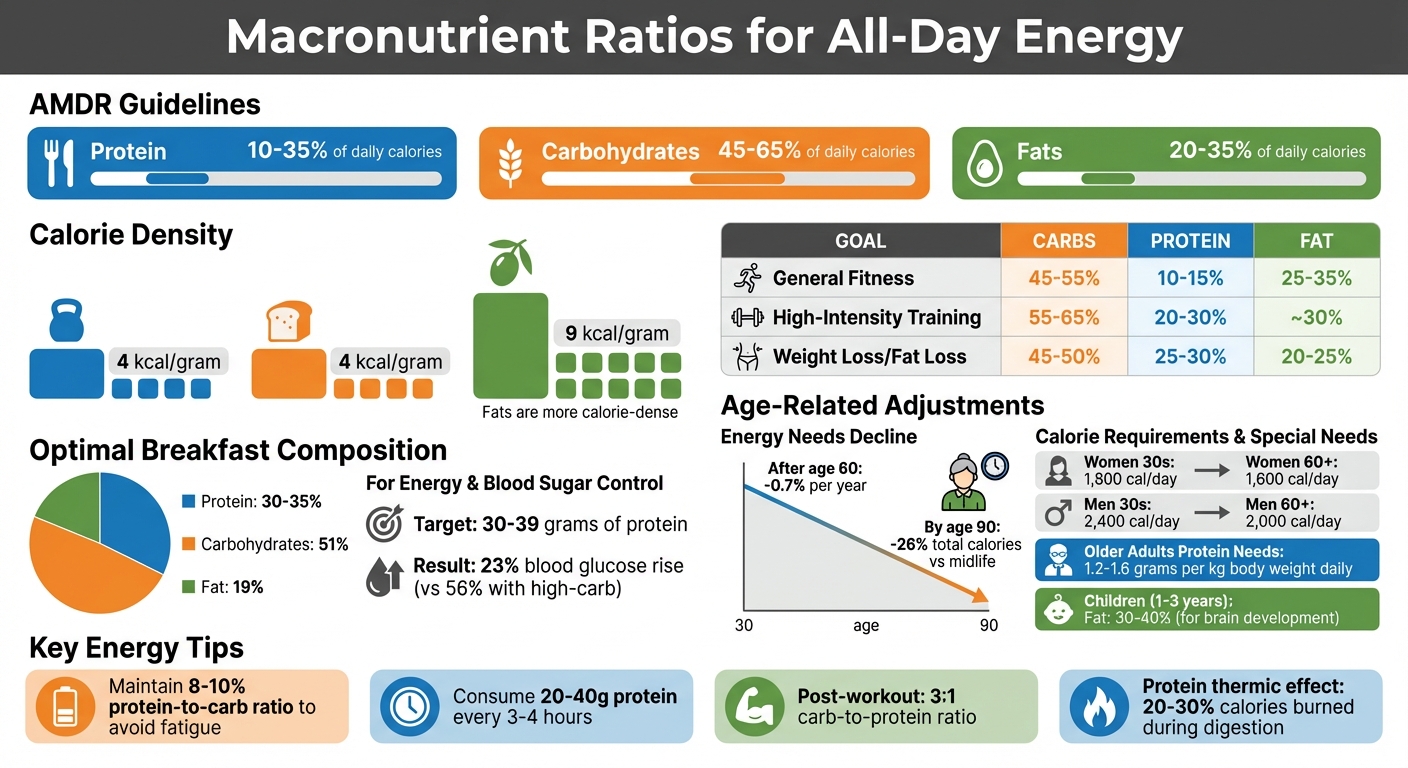
Optimal Macronutrient Ratios for Different Goals and Age Groups
Best Macronutrient Ratios for Steady Energy
What Research Shows About Energy and Macros
Research suggests that meals with an 8% protein-to-carbohydrate ratio can help stave off post-meal fatigue. On the other hand, when protein levels drop below 4% of a meal's composition, drowsiness often kicks in about two hours later. This reaction ties back to biology: meals high in carbohydrates but low in protein increase the plasma tryptophan ratio, which boosts serotonin production - a neurotransmitter linked to sleepiness. Including enough protein in your meals helps counteract this effect, keeping you more alert and focused. These findings build on earlier discussions about how macronutrient composition impacts sustained energy.
"A high-carbohydrate meal that is lacking in protein is followed by more fatigue than occurs after a meal higher in protein."
– Bonnie J. Spring, Ph.D., Professor, NCBI Bookshelf
Studies from Tufts University and the University of Freiburg highlight specific macronutrient ratios for stable energy. For example, a 2017 study involving adults aged 50–80 found that breakfasts with 30% protein, 51% carbohydrates, and 19% fat significantly reduced blood sugar spikes compared to meals dominated by carbohydrates or fats. Similarly, a 2014 study at Freiburg University Hospital examined 700-calorie breakfasts and found that a high-protein option (35% protein) caused only a 23% rise in blood glucose, while a high-carbohydrate version (68% carbohydrates) led to a much larger 56% spike.
The International Society of Sports Nutrition advises consuming 20–40 grams of protein every 3 hours to maintain energy levels. For carbohydrates, athletes typically need 5 to 12 grams per kilogram of body weight daily, while less active individuals require far fewer.
How Each Macronutrient Supports Energy
Building on this research, here’s how each macronutrient plays a role in steady energy levels:
Protein is key for satiety, offering both immediate and lasting effects. It also has the highest thermic effect, meaning 20–30% of its calories are burned during digestion, compared to 5–10% for carbohydrates and just 0–3% for fats.
Carbohydrates are the body’s go-to source for quick energy. However, the type of carbohydrate matters. Complex carbs from sources like whole grains and legumes release glucose slowly, providing steady energy. In contrast, refined carbs can cause sharp spikes and subsequent crashes. Maintaining glycogen reserves - 80–100 grams in the liver and 300–400 grams in muscles - is essential to avoid fatigue during physical activity.
Fats are a dense energy source at 9 calories per gram and play a role in hormone production. Since fats digest more slowly, they don’t provide rapid energy but are valuable as part of a balanced meal for longer-term energy.
The takeaway? To avoid energy crashes, aim for meals with at least 8–10% protein relative to carbohydrates. For breakfast, a composition of 30–35% protein works well, paired with evenly spaced protein intake every 3–4 hours to stabilize blood sugar and enhance satiety throughout the day. Balancing protein, carbohydrates, and fats is the foundation for maintaining consistent energy levels - an approach you can integrate into everyday meal planning.
Breakfast Composition and Daily Energy Levels
The Science of Energy-Supporting Breakfasts
What you eat for breakfast can set the tone for your energy levels and glucose control throughout the day. Research shows that eating breakfast helps regulate blood sugar by improving your body's ability to manage glucose. On the other hand, skipping breakfast keeps free fatty acids (FFAs) elevated in the morning, which reduces insulin sensitivity and leads to higher blood sugar levels after lunch. Simply put, starting your day with a meal helps your body handle carbohydrates more efficiently later on.
This concept, called the second meal effect, highlights how your breakfast choices impact your body's response to meals later in the day. For example, breakfasts with a low glycemic index or those rich in fermentable fibers (like oats, barley, or rye) can minimize blood sugar and insulin spikes after eating. Viscous fibers, in particular, create a barrier in the small intestine that slows glucose absorption.
"Consuming compared with skipping breakfast appeared to improve glucose and insulin responses throughout the day."
– Kevin C. Maki, PhD, Advances in Nutrition
Because insulin sensitivity is naturally higher in the morning, breakfast is the perfect opportunity to include moderate amounts of carbohydrates, balanced with enough protein. Studies show that breakfasts containing 30 to 39 grams of protein not only reduce blood sugar fluctuations but also increase feelings of fullness and even boost your resting metabolic rate by up to 30%. These benefits make it easier to maintain energy and avoid overeating later in the day.
Sample Balanced Breakfast Options
A balanced breakfast should provide 300–500 calories and around 20% of your daily protein needs - ideally 30 grams or more - to enhance satiety and manage blood sugar. Including at least 5 grams of fiber can also help sustain energy levels.
Here are a few examples of breakfasts that check these boxes:
- Eggs with lean beef or turkey: High-protein meals like this deliver the satiety and energy you need to power through your morning. A 2013 study found that overweight adolescent girls who ate a 350-calorie breakfast with 35 grams of protein (from eggs and beef) reported feeling fuller, snacked less in the evening, and had better hunger control compared to those who skipped breakfast or chose a low-protein cereal.
- Oatmeal with Greek yogurt and nuts: This meal combines the viscous fibers in oats with the protein in yogurt, creating a slow-release energy source to keep you going without a mid-morning crash. Adding about 10 grams of beta-glucan, a fiber found in oats and barley, has been shown to significantly lower peak glucose levels.
- Whole-grain toast with avocado and eggs: This option blends unsaturated fats, protein, and cereal fibers, replacing fast-digesting carbs with nutrients that improve insulin sensitivity and keep you feeling full longer.
For older adults, a breakfast higher in healthy fats may be especially beneficial. Research suggests that a meal with 45% fat, 20% protein, and 35% carbohydrates can promote better fat oxidation over 24 hours compared to a high-carb breakfast. Regardless of age, the key is to swap out sugary cereals and refined grains for whole grains, healthy fats, and adequate protein to keep your energy steady all day.
These examples can be adjusted to suit your personal preferences and energy needs, helping you stay fueled and focused throughout the day.
Adjusting Macronutrient Ratios by Age
Macronutrient Requirements at Different Ages
As you move through life, your body's energy needs change in surprising ways. From your 20s to your 60s, your total daily energy expenditure stays relatively stable. But after 60, it begins to drop, decreasing by about 0.7% per year. By the time you reach your 90s, your body may burn 26% fewer calories than it did during midlife.
This isn’t just about burning fewer calories - it’s also about how your body uses energy. Aging reduces your metabolic flexibility, or your ability to switch between fuel sources like fats and carbohydrates. For example, older adults may experience a 50% decrease in maximal fat oxidation compared to younger individuals. Add to that the muscle loss that begins in midlife and speeds up after age 60, and you’ve got another reason why metabolism slows down - muscle burns more calories than fat.
On the flip side, infants and young children have energy needs that are sky-high relative to their size. During the first year of life, newborns’ energy demands peak at 50% higher than adult levels. This is why the Acceptable Macronutrient Distribution Ranges (AMDR) are so different across age groups. For example, toddlers require 30–40% of their calories from fat to support brain development, while adults only need 20–35%.
Modifying Ratios for Age-Related Energy Needs
As you age and your calorie needs decrease, it becomes crucial to focus on nutrient-dense foods. For instance, women in their 30s typically require at least 1,800 calories daily, but this drops to about 1,600 calories for women 60 and older. Similarly, men in their 30s need 2,400 calories, while men 60 and older may only need 2,000 calories. With fewer calories to work with, every bite counts.
Protein takes center stage as you get older. While the general AMDR for protein is 10–35% for adults, older adults may need 1.2–1.6 grams of protein per kilogram of body weight daily to maintain muscle mass. This is because aging muscles become less responsive to protein intake, a phenomenon known as anabolic resistance.
"As people age, they need fewer calories to maintain the same weight." – Dr. Sarah Booth, Director and Senior Scientist at the Jean Mayer USDA Human Nutrition Research Center on Aging
"If there's a No. 1 nutrition tip for older adults, it's to make every calorie count." – Gretchen Dueñas-Tanbolliong, Associate Director of Health and Wellness at the National Council on Aging
Resistance training can also play a huge role in counteracting metabolic decline. Strength training at least twice a week can help older adults build fat-free mass and increase their resting metabolic rate by about 36 calories per day. Combine this with a well-balanced macronutrient plan - emphasizing protein, complex carbs, and healthy fats - and you’ll be better equipped to maintain energy levels and combat the effects of aging.
sbb-itb-39f6f92
How to Balance Macronutrients Daily
Planning Balanced Meals
Balancing macronutrients is a crucial step toward maintaining steady energy levels throughout the day. Here’s how you can plan and monitor your meals effectively.
Start with the Plate Method: aim to fill about two-thirds of your plate with whole grains, vegetables, fruits, nuts, and seeds, while dedicating the remaining one-third to lean protein sources. This simple approach naturally balances your macronutrients without requiring complex calculations.
Consistency is key. Dr. Robert Elliott, an Internal Medicine Physician at Scripps Coastal Medical Center, stresses:
"It's important to have a good balance of these within the diet, not just overall, but with each meal".
Distributing your macronutrients evenly across meals can help stabilize blood sugar levels, preventing energy crashes and keeping you fueled throughout the day.
| Goal/Activity Level | Carbohydrates (%) | Protein (%) | Fat (%) |
|---|---|---|---|
| General Fitness | 45–55% | 10–15% | 25–35% |
| High-Intensity Training | 55–65% | 20–30% | ~30% |
| Weight Loss/Fat Loss | 45–50% | 25–30% | 20–25% |
Source: ACE Fitness
Focus on nutrient-dense choices. Opt for complex carbohydrates like whole grains and legumes for long-lasting energy, lean proteins to support muscle health, and unsaturated fats from foods like avocados and nuts to promote satiety. After workouts, consuming a 3:1 carbohydrate-to-protein ratio can help replenish glycogen stores and support recovery.
Monitoring Your Macronutrient Intake
Tracking your macronutrient intake doesn’t have to feel overwhelming. Apps like MyFitnessPal, Cronometer, and Lose It simplify the process by logging your meals and calculating your ratios automatically. Many of these tools also integrate with platforms like Apple Health, giving you insights into how different macro distributions impact your energy and recovery.
However, it’s important to avoid obsessing over precise numbers. Lindsey Hehman, a registered dietitian at the National Institute for Fitness & Sport, notes:
"The benefits come from making adjustments as needed - not finding the perfect ratio from the very beginning".
Instead of striving for perfection, focus on gradual improvements. If detailed tracking feels like too much, take a simpler approach. Learn the macronutrient content of foods you eat frequently, and adjust portions based on your activity level. For example, on days with high-intensity training, increase your carbohydrate intake to 1.6–1.8 grams per pound of body weight. On rest days, scale it back to 1.2–1.4 grams per pound. This flexible method aligns your energy needs with your activity levels without constant calculations.
Using Supplements to Support Energy
When whole foods and mindful tracking aren’t enough to meet your macronutrient goals, supplements can help fill the gaps.
While whole foods should remain your primary source of nutrients, there are times when supplements can provide valuable support. For example, protein supplements can be especially helpful after intense workouts, aiding muscle recovery and helping to prevent age-related muscle loss. Increasing protein intake to 25–30% of your total calories can even boost your metabolism by 80–100 calories per day compared to lower-protein diets.
For athletes training multiple times a week, a post-workout supplement with a 3:1 carbohydrate-to-protein ratio can support muscle repair and replenish energy stores. Additionally, omega-3 fatty acid supplements, such as fish oil, contribute to immune health and assist in the absorption of fat-soluble vitamins like A, D, E, and K.
Brands like Purelya Nature offer high-quality supplements that complement a balanced diet. However, it’s essential to prioritize nutrient-rich whole foods first and use supplements only when necessary to meet specific macronutrient targets.
Mastering Macronutrients: Transform Your Diet with Macros
Conclusion
Research highlights an essential truth: maintaining steady energy levels hinges on a balance of macronutrients. Here's a key fact to keep in mind - while carbohydrates and proteins each provide 4 kcal per gram, fats deliver a more concentrated 9 kcal per gram. This difference is crucial when considering the timing and density of your energy intake.
The Acceptable Macronutrient Distribution Ranges (AMDR) offer a helpful framework to guide your diet: aim for 45–65% of your daily calories from carbohydrates, 20–35% from fats, and 10–35% from protein. But remember, these ranges aren't set in stone. Your ideal balance will depend on factors like your age, activity level, and overall health. For instance, slightly increasing protein intake can be particularly beneficial for older adults to help minimize muscle loss.
To turn these guidelines into action, focus on nutrient-packed whole foods. Think legumes, whole grains, vegetables, and lean proteins. These choices not only support balanced energy but also provide a wealth of essential nutrients.
Sustaining energy is all about making gradual, intentional changes. For example, spacing protein intake every 3–4 hours can promote muscle growth and help manage hunger throughout the day. By adopting this balanced approach, you're setting the stage for consistent energy and overall vitality in your daily life.
FAQs
How do I adjust my macronutrient intake to maintain steady energy throughout the day?
To keep your energy steady all day, it’s important to balance proteins, fats, and carbohydrates in a way that fits your activity levels and routine. Kick off your morning with a breakfast packed with nutrients - think complex carbs like whole grains, healthy fats from avocado or nuts, and protein from eggs or yogurt. This combo sets the stage for sustained energy. As the day progresses, tweak your carb intake based on your activity: more for high-energy tasks, less during downtime.
Eating smaller, balanced meals or snacks every few hours can help keep your blood sugar stable and avoid those dreaded energy dips. If you're gearing up for exercise, focus on carbs for a quick energy boost. Afterward, make protein the star to support recovery. By adjusting your macronutrient mix to match your lifestyle and energy needs, you’ll feel more alert and ready to tackle whatever comes your way.
What are the best breakfast choices for sustained energy throughout the day?
The best breakfasts for maintaining steady energy are built around a mix of protein, complex carbohydrates, and healthy fats. Protein options such as eggs, Greek yogurt, or legumes can help stabilize your blood sugar and keep hunger at bay. Meanwhile, complex carbs from whole grains, oats, or fruits like bananas and berries act as a reliable energy source for your brain and muscles. To round things out, healthy fats from foods like nuts, seeds, or avocado provide additional energy without causing sharp blood sugar spikes.
Some great breakfast ideas include scrambled eggs with spinach, oatmeal topped with almond butter and fresh fruit, or a yogurt parfait layered with chia seeds and granola. These combinations not only help manage blood sugar but also promote focus and keep you fueled all morning long.
How do our macronutrient needs change as we get older?
As we get older, our bodies go through changes that affect how we process and use nutrients. One big shift is the need for more protein. This is because protein plays a crucial role in fighting muscle loss (also known as sarcopenia) and maintaining strength, which helps us stay mobile and independent as the years go by.
At the same time, energy needs often decrease with age. This happens because we tend to be less active and our metabolism slows down. However, this doesn't mean nutrition becomes less important - quite the opposite. Focusing on nutrient-packed foods is essential. By adjusting the balance of carbohydrates and fats and prioritizing high-quality protein sources, you can keep your energy levels steady, lower the risk of chronic illnesses, and support overall well-being.
The bottom line? Matching your macronutrient intake to your age and lifestyle is a smart way to stay strong and healthy as you grow older.