



Tired of caffeine crashes? Boosting focus naturally is possible with simple lifestyle changes. Instead of relying on coffee or energy drinks, you can improve mental clarity with hydration, balanced nutrition, movement, and better sleep. These methods not only avoid the highs and lows of caffeine but also support long-term brain health.
Here’s a quick overview of the 10 strategies covered:
- Hydration: Drink enough water and include electrolytes to maintain brain function.
- Blood Sugar Balance: Combine protein and fiber to prevent energy dips.
- Brain Nutrients: Add omega-3s, B vitamins, and antioxidants to your diet.
- Movement Breaks: Short physical activities and good posture boost blood flow.
- Natural Light: Morning sunlight regulates energy and focus.
- Power Naps: A 10–30 minute nap can refresh your mind without grogginess.
- Mindful Breathing: Techniques like box breathing reduce stress and improve focus.
- Meditation: Daily mindfulness enhances attention and memory.
- Supplements: Options like L-theanine and omega-3s support mental clarity.
- Better Sleep: A consistent evening routine improves focus the next day.
These natural methods are easy to implement, effective, and sustainable. Start with one habit today to see lasting benefits for your focus and productivity.
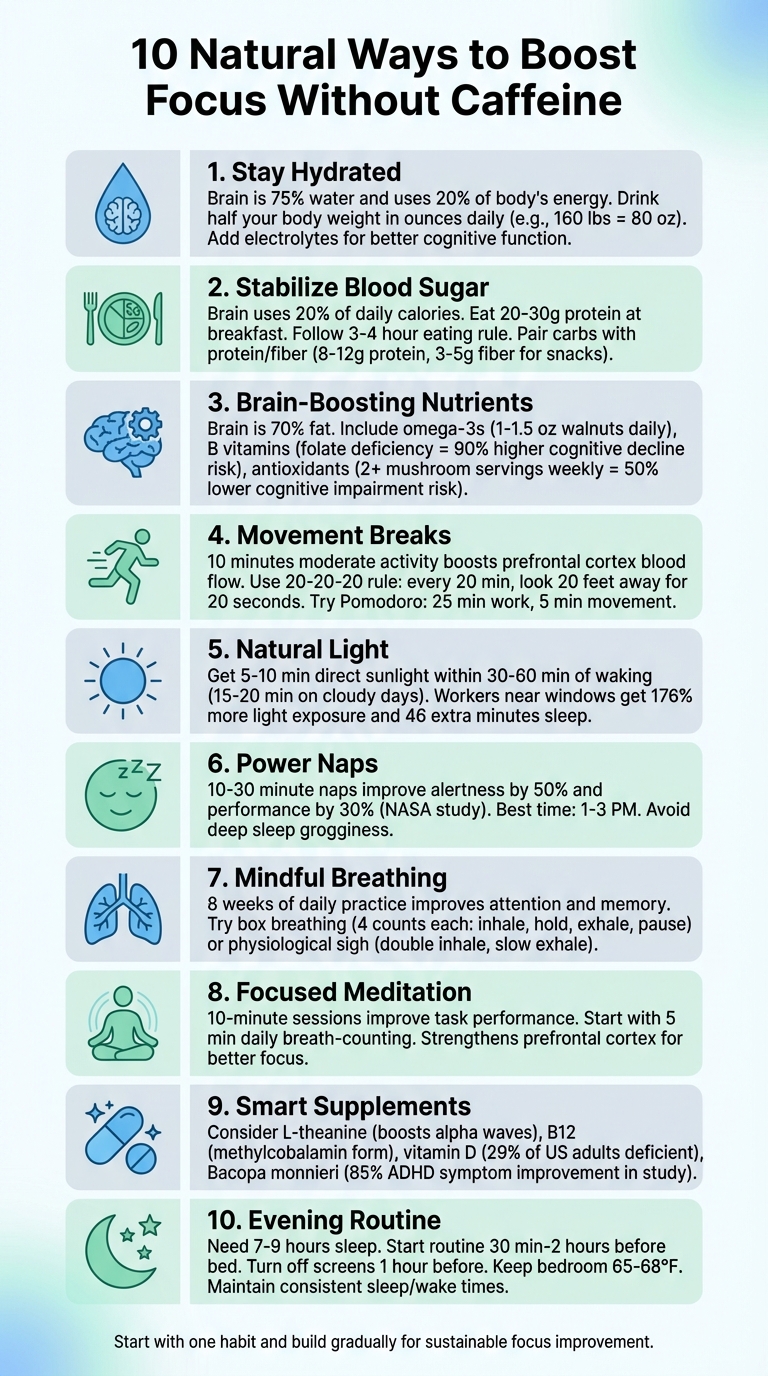
10 Natural Ways to Boost Focus Without Caffeine: Quick Reference Guide
Focus Toolkit: Tools to Improve Your Focus & Concentration
sbb-itb-39f6f92
1. Stay Hydrated and Balance Electrolytes
Did you know your brain is about 75% water, yet it accounts for only 2% of your body weight? Despite its small size, it uses a whopping 20% of your body’s energy. Water is essential for keeping your brain functioning smoothly - it regulates temperature, delivers nutrients to brain cells, and clears out waste. Even mild dehydration, where you lose just 0.5% to 2% of your body weight in fluids, can mess with your concentration, alertness, and short-term memory.
Electrolytes are another key player in brain health. Minerals like sodium and potassium are responsible for creating the electrical signals that allow your nerves to communicate. Magnesium, on the other hand, helps manage neurotransmitter activity. A study from Swansea University revealed that drinking water mixed with electrolytes - specifically 300 mg of sodium chloride - helped prevent mood dips and improved working memory response times better than plain water.
To keep your brain sharp all day, aim to drink about half your body weight in ounces of water. For example, if you weigh 160 pounds, that’s around 80 ounces. On average, men need about 15 cups (3.7 liters) of fluids daily, while women require about 11 cups (2.7 liters). Make hydration a habit - try drinking a glass of water after every bathroom break or before meals. You can also hydrate through food. Snack on water-rich options like cucumbers, watermelon, bell peppers, and zucchini, which are over 90% water.
Up next, we’ll explore how your diet can help keep your focus steady.
2. Stabilize Blood Sugar with Protein and Fiber
Did you know your brain uses about 20% of your daily calories just to handle tasks like thinking, remembering, and creating? That’s a lot of fuel! But here’s the catch: when your blood sugar spikes, you might feel a quick surge of focus, only to crash into a foggy, tired state soon after. The key to avoiding this rollercoaster? Providing your brain with a steady glucose supply instead of overwhelming it all at once.
Protein and fiber are the dream team for keeping blood sugar stable. Fiber slows down how your body absorbs glucose, helping you maintain consistent energy levels. Protein, on the other hand, takes longer to digest than carbohydrates, ensuring that your body has a gradual and steady source of fuel. As dietitian Jane Reagan explains, "Dopamine is a key neurotransmitter that helps you focus, and proteins play a big role in how it's made up".
Start your day strong with 20–30g of protein at breakfast to help balance insulin and cortisol levels. Then, stick to the 3 to 4 hour rule - eat a nutritious snack or meal every few hours to keep your energy and focus steady throughout the day. For snacks, aim for 8–12g of protein and 3–5g of fiber. Keep in mind, most Americans fall short on fiber intake - women need about 24 grams daily, while men should aim for nearly 38 grams.
Pair your carbs wisely. Always combine them with protein or healthy fats to slow digestion and avoid energy crashes. For example, try Greek yogurt with berries and seeds, apple slices with almond butter, hummus with carrots, or whole grain toast topped with eggs and spinach. Ditch refined carbs like white bread and sugary cereals, and opt for complex options like oats, quinoa, lentils, or sweet potatoes. As Mark van Oosterwijck, founder of FitChef, says, "It is not about eating cleaner. It is about eating steadier". These small changes can help you sidestep energy dips and stay mentally sharp all day long.
Up next, we’ll explore how specific nutrients can further boost your brainpower.
3. Incorporate Brain-Boosting Nutrients
Did you know your brain is about 70% fat? This means it thrives on specific nutrients to function at its best. What you eat not only supports overall brain health but also sharpens your focus and mental clarity. Let’s dive into the nutrients that can power up your brain.
Fuel your brain with omega-3 fatty acids. These are essential for maintaining brain health. DHA, a type of omega-3 found in fatty fish like salmon, mackerel, and sardines, plays a key role in building brain tissue and may lower the risk of memory loss. If you prefer plant-based sources, walnuts, chia seeds, and ground flaxseed are excellent options, as they provide ALA, which supports verbal fluency. Aim for 1–1.5 ounces of walnuts or a tablespoon of ground flaxseed daily for noticeable benefits.
Boost your brain with B vitamins - especially B6, B12, and folate. These vitamins help break down homocysteine, a compound that, in high levels, can increase the risk of stroke and Alzheimer’s disease. In fact, a folic acid deficiency could increase the risk of cognitive decline by as much as 90%. To get your dose of B vitamins, incorporate leafy greens like spinach, kale, and broccoli into your meals (at least one serving a day), along with protein-rich foods like eggs and chicken. Dr. Sohaib Imtiaz, Chief Medical Officer at Verywell Health, emphasizes:
"Our overall diet can influence our brain health and cognition and help us prevent Alzheimer's disease in the future. When possible, it's best to get these nutrients from real food before opting for supplements".
Protect your brain with antioxidants. Antioxidants shield your brain cells from oxidative stress and inflammation, which can harm neurons over time. Foods like berries, oranges, dark chocolate, egg yolks, pumpkin seeds, and mushrooms are packed with these protective compounds. For example, eating two or more servings of mushrooms weekly has been linked to a 50% lower risk of developing mild cognitive impairment.
Small changes can make a big difference. Pair tomatoes with olive oil to enhance nutrient absorption, swap refined carbs for whole grains, and add avocado to your meals for a nutrient boost. These simple tweaks can help lay the groundwork for consistent mental performance.
4. Take Movement Breaks and Adjust Posture
Staying physically active is just as important as eating well when it comes to keeping your mind sharp. Sitting for long periods can slow blood flow and reduce oxygen to the brain, which not only affects your spine’s natural alignment but also leads to mental fog. Incorporating movement breaks into your day is a simple yet effective way to regain focus.
Even a quick 10-minute activity can make a big difference. Matthew Solan, Executive Editor at Harvard Men's Health Watch, highlights this:
"Just 10 minutes of moderate-intensity running increases blood flow to the prefrontal cortex - the part of the brain responsible for executive function skills, like staying focused on a task until completion".
You don’t need fancy equipment or a gym membership to reap the benefits. A brisk walk around your home or office can do the trick. Research involving 84 participants performing computer tasks for an hour found that those who took short breaks maintained their performance, while those who didn’t saw their focus decline.
Good posture is equally important for mental energy. Slouching compresses the lungs, limiting oxygen flow to the brain. To quickly feel more alert, sit up straight, roll your shoulders back, and open up your chest. Feeling sluggish? Try briefly lowering your head below your heart to boost blood flow and wake yourself up. For extended work sessions, use the 20-20-20 rule: every 20 minutes, look at something 20 feet away for 20 seconds to refresh both your eyes and your mind.
Short bursts of movement can fight mental fatigue. When your focus starts to waver, spend 1–2 minutes doing simple exercises like squats or high knees while practicing deep diaphragmatic breathing (inhale deeply so your belly rises, then exhale slowly). These brief activities release dopamine, norepinephrine, and serotonin - neurotransmitters that help sharpen your attention . Another strategy is the Pomodoro Technique: work for 25 minutes, then take a 5-minute movement break. This method keeps your focus steady during longer tasks .
5. Get Natural Light Exposure Daily
Your body's internal clock, known as the SCN, depends on natural light to regulate when you feel awake and when you feel sleepy. When bright light hits your eyes - especially in the morning - it signals the SCN to lower melatonin levels and increase cortisol, giving you a natural boost in focus and energy. Unlike caffeine, this process keeps you alert without the risk of an energy crash.
Timing and type of light make a difference. Aim to get outside within the first 30 to 60 minutes of waking. Spend 5–10 minutes soaking up direct sunlight in the morning (extend to 15–20 minutes on cloudy days) to help reset your circadian rhythm. Outdoor light is key since windows filter out much of its intensity. Studies show that workers near windows get 176% more white light exposure than those in windowless spaces, resulting in 46 extra minutes of sleep per night on average. These small changes can make a big difference in your focus throughout the day.
Set up your environment to maximize light exposure. Open your blinds as soon as you wake up, position your workspace near a window, or enjoy your morning coffee outside. If you're stuck indoors or it's winter, consider using natural-spectrum LED bulbs to simulate morning sunlight. Even a short midday walk outside can help shake off the afternoon slump and sharpen your concentration.
The perks go beyond just staying alert. Natural light can ease symptoms of eyestrain and lift your mood. For instance, nearly half of workers in dimly lit offices report feeling very tired, and 43% say they often feel gloomy. Exposure to natural light triggers serotonin production, which helps balance your mood and sustain energy levels throughout the day.
Be mindful of blue light at night. While morning light wakes you up, evening exposure to screens can confuse your brain into thinking it’s still daytime. Try setting a digital curfew 30–60 minutes before bed and switch to warmer, dimmer lighting to help your body naturally wind down.
Up next, learn another science-backed way to keep your focus sharp all day long.
6. Optimize Focus with Strategic Power Naps
In addition to eating well and staying active, a well-timed power nap can work wonders for mental clarity. A short nap can improve focus and alertness without relying on caffeine. The key is keeping it brief - about 10 to 30 minutes. This ensures you stay in lighter stages of sleep, avoiding the grogginess that often comes with waking from deep sleep. Research shows that grogginess from deeper sleep stages can linger for up to an hour, making short naps a more effective way to recharge.
The best time for a nap is early afternoon, typically between 1 and 3 p.m., when your energy naturally dips. Napping too late in the day, however, might interfere with your nighttime sleep and disrupt your body’s internal clock. Setting an alarm for about 20 minutes can help you wake up refreshed and avoid oversleeping, which might leave you feeling sluggish.
NASA research highlights the benefits of power naps, finding that a 20–30 minute nap can improve alertness by over 50% and boost performance by 30%. Additionally, midday naps have been shown to reduce blood pressure by around 5 mm Hg, offering a surprising health perk.
To get the most out of your nap, create a restful environment. Find a quiet, dark space and consider using tools like an eye mask or earplugs to block out distractions. Experts generally recommend keeping naps to 15–20 minutes for the perfect balance of rest and rejuvenation.
7. Practice Mindful Breathing Techniques
When it comes to natural ways to sharpen focus, controlled breathing is a game-changer. It works by increasing carbon dioxide levels in the blood, which helps dilate blood vessels and improve oxygen flow to the brain. Patrick McKeown explains it simply: "slow your breathing and gently take in less air".
But the impact of mindful breathing doesn’t stop there. Diaphragmatic breathing - where your belly expands as you inhale - activates the parasympathetic nervous system through the vagus nerve. This reduces heart rate and blood pressure, effectively countering the stress response that often drains mental energy. Guy Fincham, founder of the breathwork lab at Brighton & Sussex Medical School, highlights its power:
"breathwork is one of the simplest and profoundly effective tools we have for calming the nervous system and boosting physical and mental resilience".
These physiological benefits make mindful breathing a practical tool for regaining focus and composure.
Studies suggest that practicing short daily mindfulness sessions for just eight weeks can enhance attention, memory, and mood. For a quick reset in stressful situations, try the physiological sigh: take a double inhale through your nose (one long breath followed by a shorter one) and exhale slowly through your mouth. Another effective method is box breathing, where you inhale, hold, exhale, and pause for four counts each.
If you have five minutes to spare, try a breath-counting exercise. Sit comfortably, count your breaths in sets of 10, and if your mind starts to wander, gently bring it back to the count. This simple practice trains your brain to recognize distractions and refocus with greater ease.
8. Use Short Focused Meditation Sessions
Even just a few minutes of focused meditation can work wonders for sharpening your attention. Research suggests that practicing short daily mindfulness sessions for eight weeks can boost your attention, memory, and mood. In fact, a 2018 study revealed that participants who engaged in a 10-minute guided meditation performed better on computer tasks right afterward compared to those who listened to a lecture.
Focused meditation, much like mindful breathing, strengthens your ability to concentrate. Kim Willment, a neuropsychologist at Brigham and Women's Hospital, explains:
"Mindfulness is about focusing attention on the present moment, and practicing mindfulness has been shown to rewire the brain so that attention is stronger in everyday life".
This "rewiring" happens because meditation enhances the prefrontal cortex, the area of the brain responsible for planning, decision-making, and maintaining focus. It’s a simple, science-backed approach you can start using today.
If you're new to meditation, Focused Attention (FA) meditation is a great place to begin. Close your eyes and center your attention on your breath or a soothing sound. When your thoughts inevitably wander, gently guide your focus back without judgment. This practice teaches your brain to spot distractions quicker and helps you return to tasks with greater ease. Begin with just five minutes a day and gradually increase as your focus improves.
For a simple exercise, try a five-minute breath-counting technique: sit comfortably, count your breaths in cycles of 10, and restart if you lose count or reach 10. You can also bring mindfulness into everyday tasks, like washing dishes or showering, by fully engaging your senses and concentrating on the experience.
To make meditation even more practical, combine it with the Pomodoro Technique. Work for 25 minutes, then take a five-minute meditation break to recharge your focus. These short meditation sessions can help stave off the mental fatigue that often sets in after prolonged periods of concentration.
9. Explore Herbal and Nutrient-Based Supplements
Supplements can be a helpful addition when lifestyle changes alone don’t fully support mental clarity. They offer a way to enhance focus and energy without the dreaded mid-day crashes. Take L-theanine, for example. This amino acid, naturally found in green tea, boosts alpha brain waves, helping you stay calm yet alert - a perfect state for focused productivity [51,55].
Another key player? B vitamins, especially vitamin B12 in its methylcobalamin form. These vitamins are essential for converting food into cellular energy and producing neurotransmitters like dopamine and norepinephrine, which are vital for sustained attention [55,51]. If staying focused is still a struggle, it might be worth checking your nutrient levels. Did you know that 29% of U.S. adults are vitamin D deficient? And for some, low iron levels can account for up to 30% of ADHD symptom severity.
Adaptogenic herbs are also worth considering. Panax ginseng is known for helping the body manage stress and maintain steady energy levels. Meanwhile, Bacopa monnieri (often called Brahmi) has been shown to improve memory with regular use, and Lion's Mane mushroom supports brain cell growth, promoting sharper mental clarity [52,54,55]. In one study, 85% of children with ADHD saw significant symptom improvement after taking 225 mg of Brahmi extract daily.
Before diving into any supplement regimen, it’s essential to consult with your healthcare provider. Blood tests can confirm deficiencies, ensuring you’re addressing the right issues. Also, look for products certified by trusted organizations like the United States Pharmacopeia (USP) or the National Sanitation Foundation (NSF) [59,60].
As Katherine Maslen, N.D., explains:
"Fish oil is one of my go-to supplements when it comes to helping neurodiverse patients. It's literally food for your brain".
10. Improve Sleep Quality with an Evening Routine
The quality of your sleep tonight sets the tone for your focus and energy tomorrow. During deep sleep, your brain gets rid of toxins and strengthens memory, which helps prevent brain fog and keeps you energized. Adults generally need 7 to 9 hours of sleep each night to stay sharp and maintain concentration.
Having a consistent evening routine can help your body wind down and prepare for rest. Start this process 30 minutes to 2 hours before your bedtime. One simple but effective step is turning off electronic devices at least an hour before bed. The blue light from screens can interfere with melatonin production, tricking your brain into thinking it’s still daytime. From there, incorporate small, calming rituals to signal bedtime.
Taking a warm bath or shower about an hour before bed can help. This mimics the natural drop in body temperature that happens as you fall asleep, making you feel drowsier. If your mind tends to race at night, try spending five minutes jotting down a to-do list for the next day. Research shows that this simple habit can help you fall asleep faster.
What you eat and drink before bed also plays a role. Avoid heavy meals at least 2 to 3 hours before bedtime, but if you're feeling hungry, opt for light snacks like cherries, kiwis, or walnuts - these foods contain natural sleep-supporting compounds. Be mindful of caffeine too; its effects can linger for 6–8 hours, potentially disrupting your sleep cycle if consumed late in the day. Finally, pay attention to your sleep environment.
Make your bedroom a haven for rest. Keep the room cool - between 65–68°F - dark, and quiet. You can also use calming aids like lavender aromatherapy or soothing sounds, such as rain or pink noise, to enhance relaxation. Dr. David Rosen emphasizes the importance of turning knowledge into action:
"There is a difference between understanding a concept and really internalizing it as a part of your behavior".
Consistency is key to maintaining a healthy sleep cycle. Stick to the same sleep and wake times every day - even on weekends - to help regulate your circadian rhythm.
Conclusion
Improving focus doesn't have to be complicated - simple, consistent habits can make a big difference. Staying hydrated, maintaining stable blood sugar levels, and getting enough omega-3s are key, as these nutrients provide essential support for your nervous system, which is made up of about 70% fat. Combining these with physical and environmental strategies can further enhance your ability to concentrate. For instance, taking regular breaks, getting natural light exposure, and even short power naps of 10–20 minutes can help reset your energy levels. Adding mindfulness practices can also reduce stress and bring your wandering mind back on track.
Together, these approaches offer a steadier, more sustainable focus compared to the spike-and-crash effects of caffeine. As a reminder:
"Don't be a mental superhero. Do one task at a time until it's completed, and then move on to the next one. That way, your mind doesn't have to compete with other stimuli".
Start small - pick one habit to implement and gradually build from there. Try these techniques on less demanding days to see what works best before applying them to high-pressure situations.
If concentration remains a challenge despite these changes, it might be time to consult a healthcare professional. Persistent focus issues could point to conditions like ADHD, sleep apnea, or even side effects from medications. A doctor or naturopathic physician can help uncover underlying causes and provide tailored advice. By adopting these straightforward habits, you can achieve a clearer, more focused mind - without relying on caffeine-induced highs and lows.
FAQs
What are some easy ways to add more omega-3s to my diet for better focus?
Adding omega-3s to your diet is a straightforward way to boost brain health and sharpen your focus. A good starting point? Include fatty fish like salmon, mackerel, or sardines in your meals at least twice a week. These fish are packed with EPA and DHA - two vital omega-3s known to support cognitive function. Not a fan of seafood? No problem. Plant-based options like ground flaxseeds, chia seeds, and walnuts provide ALA, another type of omega-3 that your body can convert into EPA and DHA.
Here are some simple ways to work omega-3s into your meals:
- Breakfast: Stir a tablespoon of ground flaxseed into your oatmeal or blend it into a smoothie.
- Lunch: Sprinkle a handful of walnuts over your salad or use walnut oil as a dressing.
- Dinner: Pair baked salmon or sardines with a side of roasted vegetables.
For those on vegetarian or vegan diets, algae-based omega-3 supplements offer a reliable source of DHA and EPA. By regularly including these foods or supplements in your routine, you can help maintain steady omega-3 levels, promoting better focus and mental clarity throughout the day.
What are some mindful breathing techniques to naturally improve focus?
Mindful breathing offers a straightforward way to sharpen your focus and bring a sense of calm to your mind. One popular technique is the Stimulating Breath, which involves quick, deliberate breaths. Here's how it works: take a rapid inhale through your nose, pause briefly, and then exhale in a controlled manner. This method increases oxygen flow, giving your brain's focus centers a gentle wake-up call.
Another effective approach is diaphragmatic breathing, which is known to ease stress and enhance concentration. To practice, sit up straight and close your eyes. Breathe in deeply through your nose for a count of four, hold the breath for another four counts, and then exhale slowly through your mouth over six counts. Repeat this rhythm for one to two minutes, and you'll likely feel more grounded and ready to tackle whatever comes next.
How can natural light improve my focus and energy levels?
Natural light is essential for keeping your body’s internal clock, or circadian rhythm, on track. Morning sunlight, in particular, plays a key role in syncing your sleep-wake cycle, which can lead to better sleep at night and steady energy levels throughout the day. This natural alignment helps you avoid those mid-afternoon crashes and stay focused for longer stretches.
Beyond energy regulation, daylight has a direct impact on your mood and brainpower. Exposure to sunlight boosts serotonin, a neurotransmitter tied to alertness and concentration. Research shows that people who spend more time in natural light tend to feel happier, less stressed, and more productive than those stuck under artificial lighting. Simple changes like setting up your desk near a window, stepping outside for quick breaks, or incorporating skylights can keep you feeling sharp and energized - no caffeine required.